
 A failing sewer line is one of the most stressful problems a property can face — and one of the hardest to budget for, because no two repairs are the same. If you’re searching for the sewer line repair cost in Littleton, CO, you’re likely dealing with backups, slow drains, foul odors, or a recent camera inspection that turned up bad news. The good news: understanding what actually drives the price puts you back in control, helps you avoid overpaying, and lets you act before a small issue becomes a major excavation.
At Drain Pros Plumbing Denver, we serve homeowners, commercial property owners, and building managers across Littleton and the surrounding Denver metro area with straightforward diagnostics and honest pricing. This guide breaks down what affects your sewer line repair cost, the warning signs that you shouldn’t ignore, how the repair process works, and what makes a repair in Littleton different from one anywhere else.
Why Sewer Line Repair Costs Vary So Much
Sewer line repair isn’t a flat-rate service, and any company quoting you a firm price over the phone without seeing the line should make you cautious. The cost depends on what’s wrong, how deep the pipe sits, how long the damaged run is, and which repair method the situation calls for.
For context, sewer line work across the Denver metro commonly lands anywhere from a few hundred dollars for a minor spot repair to several thousand dollars for a full replacement, with industry guidelines often cited around $50 to $300 per foot depending on access and conditions. A complete line replacement in Colorado typically falls in a broad $3,500 to $15,000 range, and complex traditional dig-and-replace jobs can climb higher. These are general market figures, not a quote — your actual price comes only after a proper inspection. We’ll walk you through exactly what moves that number up or down below.
The most important takeaway is this: waiting almost always costs more. A line that could have been spot-repaired or lined for a modest amount can deteriorate into a full collapse requiring excavation, landscaping repair, and concrete work. Catching the problem early is the single biggest lever you have on price.
 Why This Service Matters in Littleton
A compromised sewer line is more than an inconvenience — it’s a health and structural risk. Raw sewage backing up into a basement or commercial floor drain exposes occupants to bacteria and contaminants. Left unchecked, leaks beneath a slab or in the yard can saturate soil, undermine foundations, and create sinkholes or settling. For commercial and building owners, a sewer failure can shut down operations, trigger tenant complaints, and create liability.
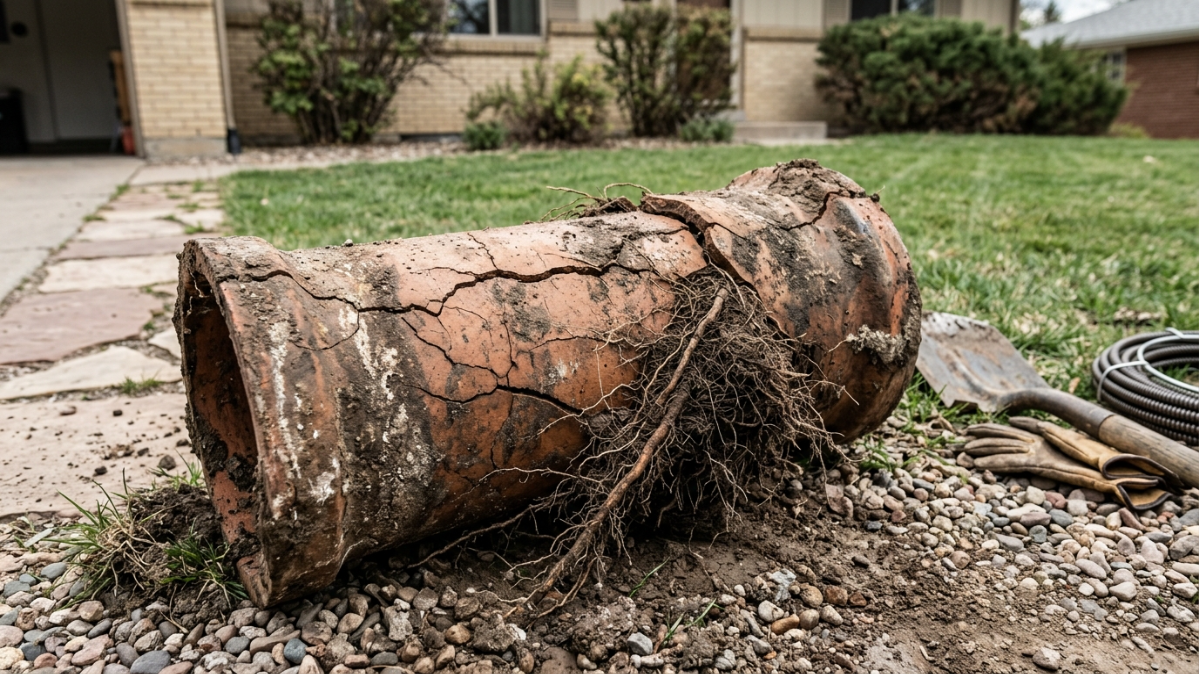
Littleton’s housing stock makes this especially relevant. Many established neighborhoods were built decades ago with clay or cast-iron sewer pipe, materials that crack, corrode, and invite tree-root intrusion as they age. Add Colorado’s freeze-thaw cycles and expansive clay soils that shift with moisture, and older lines are under constant stress. The result is that a lot of Littleton properties are quietly carrying sewer lines living on borrowed time — which is exactly why proactive inspection and timely repair pay for themselves.
Common Problems Sewer Line Repair Solves
If you’re researching symptoms before calling, here are the issues that most often lead to a sewer line repair — and what they usually mean:
- Frequent or multiple-fixture backups. When more than one drain backs up at once (for example, the toilet gurgles when the washing machine drains), the blockage is usually in the main line, not a single fixture.
- Tree-root intrusion. Roots seek out the moisture and nutrients inside sewer pipes and work their way into joints and cracks. This is one of the most common causes of failure in Littleton’s mature, tree-lined neighborhoods.
- Cracked, collapsed, or “bellied” pipe. Shifting soil and age can cause a section of pipe to sag and pool waste, or crack and collapse entirely.
- Persistent sewage odors inside or in the yard, often paired with unusually green or soggy patches of lawn above the line.
- Corroded cast iron or deteriorated clay pipe that has reached the end of its service life.
- Slow drains throughout the property that return quickly after snaking, signaling a deeper structural issue rather than a simple clog.
Some of these can be resolved with thorough drain cleaning or high-pressure hydrojetting to clear roots and buildup. Others require structural repair. The only way to know which camp you’re in is a diagnostic inspection — which is where our process starts. If you’re trying to gauge whether a repair or full replacement is on the horizon, this guide on how to know if you need a sewer line replacement in Denver is a helpful starting point.
Our Sewer Line Repair Process
We keep the process transparent so you understand what you’re paying for at every step.
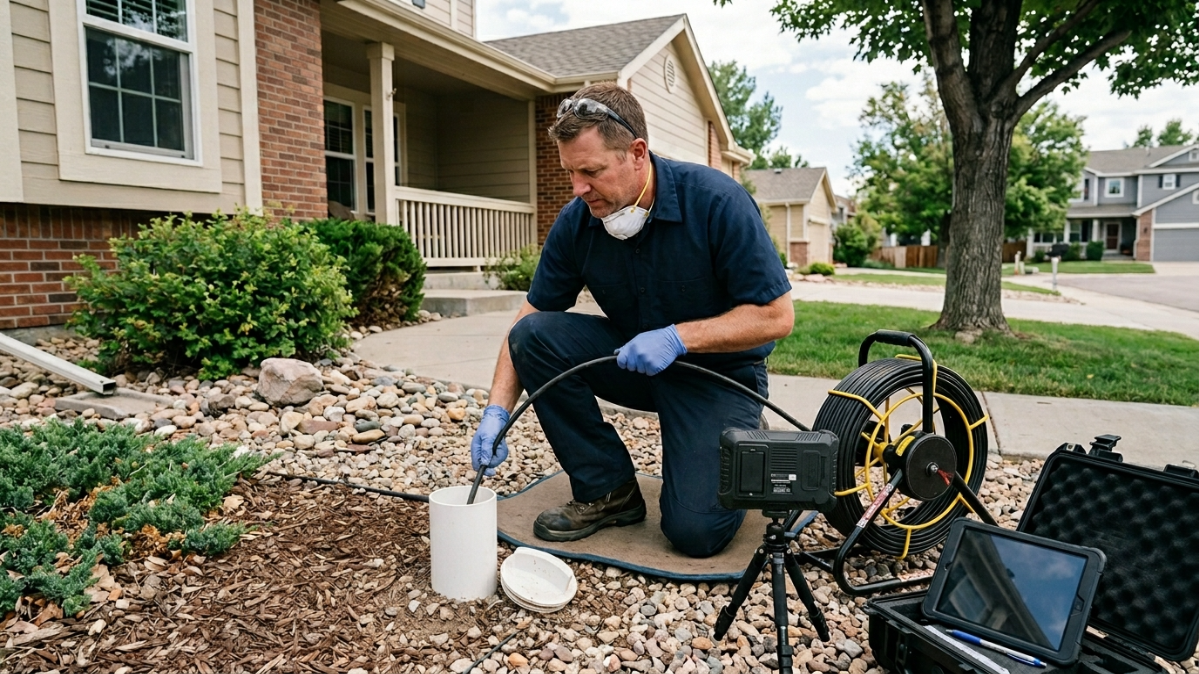
1. Diagnostic camera inspection. We start with a sewer video inspection, feeding a high-resolution camera through the line to pinpoint the exact location, depth, and nature of the damage. This step prevents you from paying for repairs you don’t need — and it’s why we never quote blind. You can read more about the benefits of sewer video inspection and how it protects your budget.
2. Clear, written assessment and estimate. Once we see the problem, we explain your options in plain language and provide an upfront estimate — including whether a trenchless repair or traditional excavation is the better fit.
3. The repair. Depending on the diagnosis, we may perform a localized spot repair, a trenchless pipe lining (CIPP) or pipe bursting that minimizes yard disruption, or a traditional dig-and-replace for severely collapsed lines. Our full-scope sewer repair and water, sewer, and gas line services cover every method.
4. Verification and cleanup. After the repair, we re-camera the line to confirm the fix and leave your property clean.
Why Choose Drain Pros Plumbing Denver
When you’re spending real money on a repair you can’t see, trust matters more than anything. Here’s what we bring to every Littleton job:
- Diagnosis before pricing. We inspect first and quote second, so you’re never paying for guesswork.
- The right method for the job. We’re equipped for both trenchless and traditional repair, which means we recommend what your line actually needs — not just what we happen to do.
- Local experience. We work on Denver-area homes and commercial buildings every week and understand the clay soils, aging clay-and-cast-iron lines, and freeze-thaw stresses specific to this region.
- Residential and commercial capability. From single-family homes to multi-tenant buildings, our property management and commercial services keep operations running.
- Honest, upfront communication. No surprise fees, no pressure — just a clear explanation of your options.
How Sewer Line Repair Applies Specifically to Littleton & Nearby Areas
Littleton sits in a part of the Denver metro where geography and housing age combine to make sewer issues common. The area’s expansive clay soils swell when wet and contract when dry, putting repeated stress on buried pipe and joints. Combined with Colorado’s hard winters, that ground movement is a leading cause of cracked and offset sewer lines.
Many Littleton homes — particularly in established neighborhoods near downtown Littleton, Ketring, and the older blocks closer to the South Platte — were built when clay and cast iron were standard, materials that are now well past their prime. Mature trees that make these streets beautiful are also the leading source of root intrusion into sewer joints.
We serve Littleton and the surrounding communities, including nearby areas across the south Denver metro such as Centennial, Highlands Ranch, Englewood, and the broader Denver service area. Wherever you are, the underlying conditions are similar: aging infrastructure plus shifting soils equals sewer lines that need attention. Permit requirements for sewer work can also vary by jurisdiction, and we handle that paperwork so your repair stays compliant. For a broader look at local sewer help, see our overview of Denver sewer repair help.
What Affects Your Sewer Line Repair Cost: The Full Breakdown
Since “how much does it cost” is the question that brought you here, let’s break down the factors that determine your final price. Use this as a framework when you compare estimates.
- Extent and location of the damage. A single cracked joint near an accessible cleanout costs far less than a collapsed run beneath a driveway or 40 feet out toward the street.
- Length of pipe affected. Lining or replacing 10 feet is a very different investment than a 60-foot run to the city main.
- Pipe depth and access. Deep lines and hard-to-reach connection points require more labor and equipment. Existing accessible cleanouts keep costs down; having to excavate just to create an entry point adds to the total.
- Repair method. Traditional dig-and-replace is labor- and equipment-intensive and often the most expensive route, especially when landscaping, driveways, or concrete must be restored. Trenchless methods like CIPP lining and pipe bursting frequently run meaningfully less than full excavation and spare your yard, though the best method depends entirely on the pipe’s condition.
- Prep work. Heavy root masses or calcified grease may require hydrojetting before a line can be lined, which adds time.
- Permits. Sewer work in the Denver area requires permits, with fees that commonly run a few hundred dollars; your contractor should handle this for you.
Timeline expectations: Most sewer line repairs are completed in roughly one to three days, while more complex replacements can take up to a week depending on depth, length, and surface restoration.
A worthwhile note on value: a relatively small camera inspection up front can save you thousands by confirming exactly what needs to be done — and what doesn’t. If you want to understand the long-term math, this read on how much money you can save by fixing your drain line is genuinely useful. Because every line is unique, the only way to get an accurate sewer line repair cost for your Littleton property is an on-site inspection.
Get an Honest Sewer Line Repair Cost — Call Drain Pros Plumbing Denver Today
You don’t have to guess what your repair will cost or wonder whether you’re being overcharged. The fastest way to get a real answer on your sewer line repair cost in Littleton, CO is a professional camera inspection and a clear, upfront estimate — and the sooner you act, the more options you have and the more you typically save.
Drain Pros Plumbing Denver diagnoses the problem first, explains your choices in plain language, and recommends the right repair for your line — trenchless or traditional. Whether you’re a homeowner facing a backup or a building owner protecting your property and tenants, we’re ready to help.
Call us now at (720) 664-8988 to schedule your sewer line inspection and get a straightforward repair estimate. Don’t wait for a small crack to become a costly excavation — reach out today.
Frequently Asked Questions
How much does sewer line repair cost in Littleton, CO?
How much does sewer line repair cost in Littleton, CO?
There’s no single price, because cost depends on the damage, the length and depth of the affected pipe, and the repair method. As general Denver-metro context, minor spot repairs can run a few hundred dollars, while full line replacements often fall in a broad several-thousand-dollar range, with figures sometimes cited around $50–$300 per foot. The only way to get an accurate number for your property is an on-site camera inspection and a written estimate.
Is trenchless sewer repair cheaper than digging?
Is trenchless sewer repair cheaper than digging?
Often, yes. Trenchless methods like pipe lining (CIPP) and pipe bursting typically cost less than full traditional excavation because they avoid extensive digging and the landscaping, driveway, or concrete restoration that comes with it. However, trenchless isn’t right for every situation — a severely collapsed pipe may still require excavation. We recommend the method based on what your line’s actual condition calls for.
How do I know if my sewer line is cracked or just clogged?
How do I know if my sewer line is cracked or just clogged?
A simple clog usually affects one fixture and clears with snaking. A structural problem tends to cause repeated backups, multiple fixtures draining slowly, sewage odors, or soggy patches in the yard — and the problem returns quickly after cleaning. A camera inspection settles the question definitively by showing the inside of the pipe, so you’re never guessing or paying for unnecessary work.
Does homeowners insurance cover sewer line repair?
Does homeowners insurance cover sewer line repair?
Sometimes, depending on the cause and your policy. Insurers may cover damage from sudden events like certain storms or falling objects, but typically exclude damage from age, wear, lack of maintenance, or tree roots — which are the most common causes. Review your specific policy and ask about any sewer or service-line coverage you may have added.
How long does a sewer line repair take?
How long does a sewer line repair take?
Most repairs are completed within one to three days. Trenchless repairs are often faster since there’s less excavation and cleanup, while complex full replacements involving deep or long pipe runs and surface restoration can take up to about a week. We give you a realistic timeline as part of your estimate.
Why does my whole house drain slowly, not just one sink?
Why does my whole house drain slowly, not just one sink?
When multiple fixtures back up or drain slowly at the same time — especially if the toilet gurgles when you run water elsewhere — the issue is usually in the main sewer line rather than an individual drain. This is a classic sign of a main-line blockage or structural problem and is worth inspecting promptly before it worsens.
Can you repair a commercial building’s sewer line in Littleton?
Can you repair a commercial building’s sewer line in Littleton?
Yes. We handle sewer line repair for commercial properties and multi-tenant buildings, not just single-family homes. Our property management services are built around minimizing downtime and disruption, and we can coordinate inspections, repairs, and reporting to keep your building operating and your tenants comfortable.



