
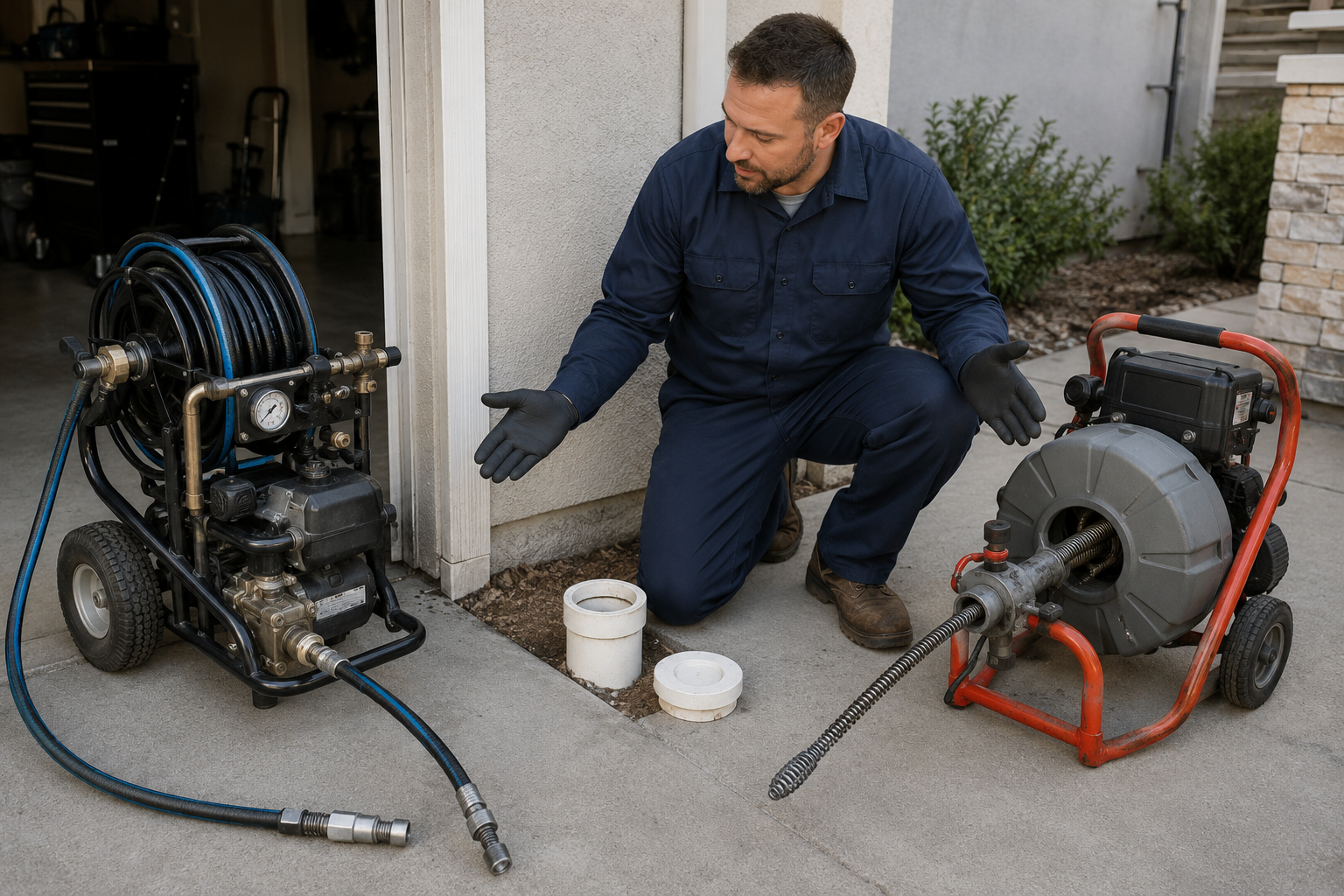
 Hydro jetting is usually the better long-term solution for recurring, greasy, or heavy drain buildup, while drain snaking is better for quick, affordable removal of simple clogs. If the blockage is isolated and recent, snaking may be enough; if the pipe is coated with sludge, roots, scale, or repeated backups, hydro jetting provides a deeper clean.
This guide compares Hydro Jetting vs Drain Snaking so Denver homeowners, landlords, restaurants, and property managers can make a practical decision based on clog severity, pipe condition, cost, and long-term value.
Understanding Hydro Jetting
Hydro jetting is a professional drain and sewer cleaning method that uses highly pressurized water to scour the inside of a pipe. Instead of only punching through a clog, hydro jetting flushes grease, sludge, soap buildup, mineral deposits, food waste, and other debris from the pipe walls.
A plumber usually starts with a sewer video inspection to confirm the condition of the line. This matters because hydro jetting is powerful. If a pipe is collapsed, severely cracked, or structurally compromised, blasting water through it may not be the right first move. Once the line is confirmed safe, the plumber feeds a jetting hose into the cleanout or drain access point. Specialized nozzles spray water forward and backward, breaking apart buildup while pulling debris out of the line.
Typical hydro jetting costs are higher than basic snaking because the equipment is more advanced, the setup takes more time, and the cleaning is more comprehensive. For many residential jobs, the price can vary based on pipe length, access, severity of buildup, whether camera inspection is included, and whether the blockage is in a branch drain or main sewer line.
Hydro jetting is ideal for recurring drain problems, greasy kitchen lines, commercial properties, restaurants, older homes with long-term buildup, and main sewer lines that keep slowing down after basic cleaning. In Denver, it can be especially useful for properties with mature trees, older clay or cast iron sewer lines, and heavy seasonal household use during cold months.
For a dedicated service page, see Hydrojetting.
Understanding Drain Snaking
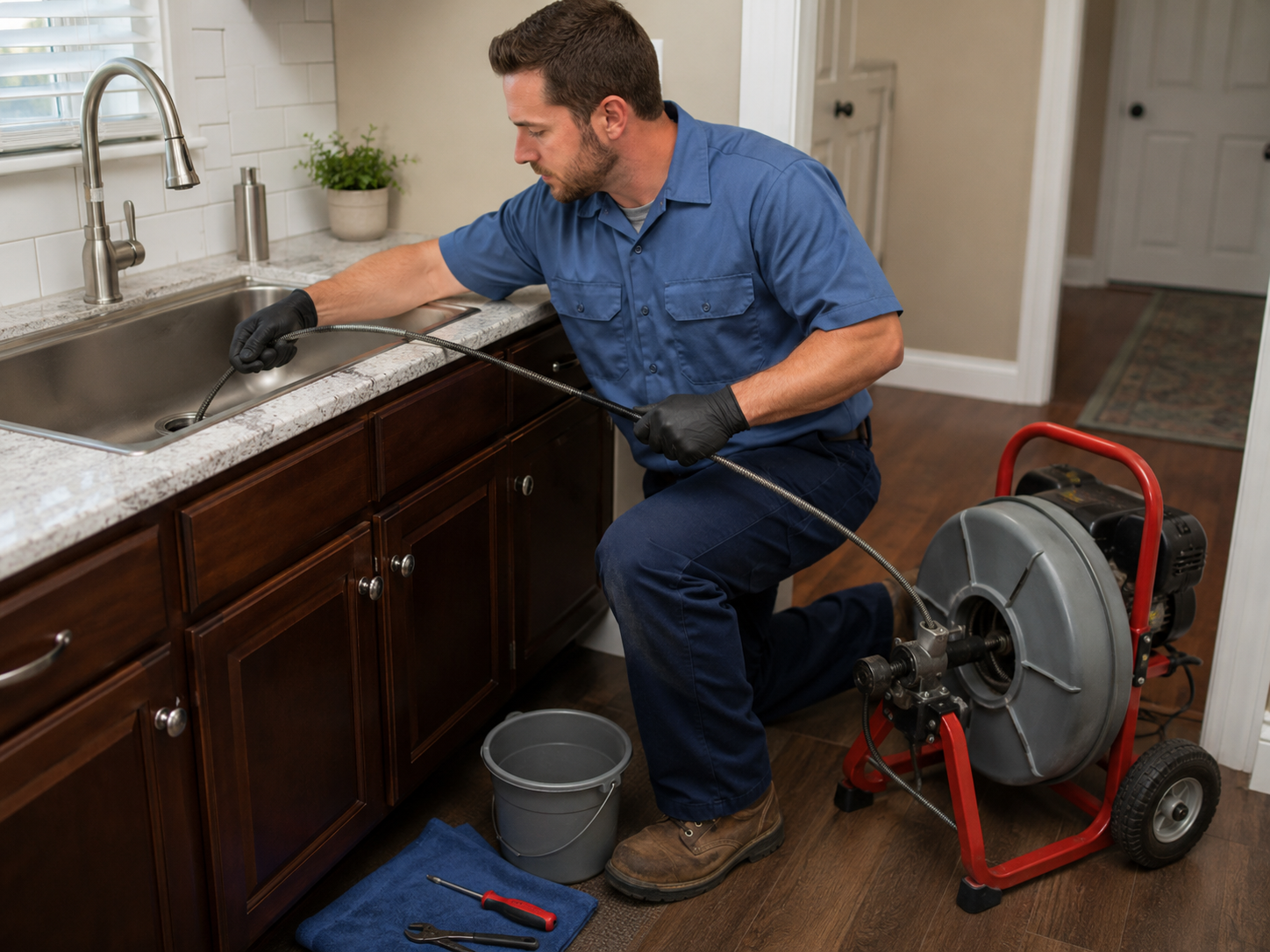 Drain snaking, also called augering, uses a flexible cable with a cutting or boring head to break through a clog. The plumber feeds the cable into the drain, toilet, tub, floor drain, or sewer line until it reaches the blockage. The rotating head then cuts into or pushes through the obstruction so water can flow again.
Snaking is one of the most common forms of drain cleaning because it is fast, practical, and cost-effective for many everyday clogs. It works well for hair clogs, toilet paper blockages, small food obstructions, minor roots, and localized buildup near a fixture.
The biggest advantage of drain snaking is affordability. It usually costs less upfront than hydro jetting and can often restore drainage quickly. For a one-time clogged toilet, slow shower drain, or kitchen sink backup, snaking may be the right first step.
The limitation is that snaking usually clears a path through the blockage rather than cleaning the entire pipe wall. If the pipe is lined with grease, sludge, or mineral scale, the drain may work again temporarily but clog again later. This is why snaking can feel like a short-term fix when the real problem is pipe buildup.
For Denver homes with aging plumbing, recurring backups should not be treated as normal. If snaking only buys a few weeks or months of relief, it may be time to inspect the line and consider deeper cleaning or sewer repair.
Side-by-Side Comparison
| Attribute | Hydro Jetting | Drain Snaking |
|---|---|---|
| Cleaning Depth | Deep pipe-wall cleaning that removes buildup | Clears or punches through the clog |
| Best For | Grease, sludge, roots, recurring backups, main lines | Hair, toilet paper, small obstructions, simple clogs |
| Upfront Cost | Higher | Lower |
| Long-Term Value | Stronger for recurring or heavy buildup | Better for simple one-time clogs |
| Pipe Condition Needed | Pipes should be inspected and structurally sound | Can be used in many situations, but still requires care |
| Speed of Service | Setup may take longer | Usually faster |
| Effect on Grease Buildup | Excellent | Limited |
| Effect on Root Intrusion | Can clear smaller roots and debris when appropriate | Can cut through some roots but may leave remnants |
| Preventive Maintenance Value | High | Moderate |
| Ideal Customer | Homeowners, restaurants, property managers, recurring clog cases | Homeowners with isolated, recent blockages |
Pros and Cons Breakdown
Pros of Hydro Jetting
- Deep cleaning performance: Hydro jetting cleans the pipe walls, not just the center of the blockage.
- Better for recurring clogs: It is a strong option when the same drain keeps backing up.
- Effective against grease and sludge: Kitchen lines, restaurants, and high-use drains often benefit from the full-pipe flush.
- Useful for preventive maintenance: Scheduled jetting can help reduce emergency backups.
- Pairs well with camera inspection: A plumber can verify pipe condition before and after the service.
Cons of Hydro Jetting
- Higher upfront cost: The equipment, labor, and setup are more involved.
- Not ideal for damaged pipes: Fragile or collapsed lines may need repair before jetting.
- May be more than needed: A simple hair clog may not require this level of service.
- Requires professional equipment: This is not a realistic DIY solution.
Pros of Drain Snaking
- Lower initial cost: Snaking is typically the more budget-friendly first option.
- Fast clog relief: It can quickly restore flow for common household drain issues.
- Good for localized blockages: Hair, paper, and small obstructions often respond well.
- Less setup time: The process is usually simpler than jetting.
- Widely used: Most plumbers can perform basic snaking services.
Cons of Drain Snaking
- Limited cleaning depth: It may open the clog without removing buildup from pipe walls.
- Recurring clogs may return: Grease and sludge can remain inside the pipe.
- Less effective for heavy buildup: Thick debris may require a more aggressive cleaning method.
- Can miss underlying issues: A drain may appear fixed while a deeper sewer problem remains.
Which Option is Better? The Ultimate Showdown
The best choice depends on what is causing the clog, how often it happens, and what condition the pipe is in. Looking only at upfront price can lead to the wrong decision. A cheaper service may be the right choice for a small clog, but it may become expensive if the same drain needs repeated visits.
Choose drain snaking if your priority is quick, affordable relief from a simple blockage. For example, if a bathroom sink is draining slowly because of hair buildup, or a toilet is clogged from too much paper, snaking is usually a practical first move. It solves many common problems without overcomplicating the job.
Choose hydro jetting if your priority is long-term drain performance. When the line has years of grease, sludge, soap scum, or recurring debris, hydro jetting is more strategic. It removes the material that causes repeated restrictions, which means fewer future backups and better flow.
In a cost-versus-benefit comparison, Hydro Jetting vs Drain Snaking is not simply “expensive versus cheap.” It is “deep cleaning versus blockage removal.” Snaking is often the better tactical solution. Hydro jetting is often the better strategic solution.
For Denver property managers, the decision may also depend on tenant disruption. A single backed-up line in an apartment or rental home can trigger complaints, water damage risk, and emergency coordination. In that case, deeper cleaning may create better operational efficiency than repeated short-term fixes. See Property Management Plumbing for service context.
For restaurants and food-heavy kitchens, hydro jetting is often the stronger option because grease accumulation is rarely solved by punching a hole through the blockage. For older homes, the decision should start with inspection. If the pipe is in good condition, jetting may be appropriate. If the line is cracked, bellied, or offset, the better path may involve water, sewer, or gas line service or targeted sewer repair.
A good decision framework looks like this:
- Choose snaking when the clog is simple, recent, and isolated.
- Choose hydro jetting when the clog is recurring, greasy, severe, or affecting a main line.
- Choose camera inspection when the cause is unclear.
- Choose repair when the pipe itself is damaged.
In short, drain snaking wins on upfront cost and speed. Hydro jetting wins on cleaning power, prevention, and long-term value.
When a Camera Inspection Should Come First
Before deciding between Hydro Jetting vs Drain Snaking, it is often smart to inspect the pipe. A camera inspection helps identify roots, cracks, sagging sections, pipe separation, grease buildup, and foreign objects. This protects the homeowner from paying for the wrong service.
For example, a snake may restore temporary flow through a broken line, but it will not correct the structural issue. Hydro jetting may clean a greasy pipe beautifully, but it should not be used blindly on a fragile line. Camera inspection gives the plumber and property owner a clear roadmap.
This is especially important for older Denver neighborhoods where sewer laterals may have clay, cast iron, or aging pipe materials. If backups keep happening, the goal should shift from “clear the clog today” to “understand why the clog keeps coming back.”
Helpful related resource: How Often Home Plumbing Should Be Inspected.
Cost Considerations: Short-Term Price vs Long-Term ROI
Drain snaking usually has the lower upfront cost. That makes it attractive when the clog is minor and unlikely to return. If a guest flushes too much toilet paper or a shower drain collects hair, snaking is often enough.
Hydro jetting costs more because it delivers more. It can clean the full internal pipe surface and flush away buildup that a cable may leave behind. For recurring kitchen clogs, main line backups, or sewer lines with heavy debris, the return on investment can be stronger because it reduces repeat service calls.
Think of snaking as reopening the road and hydro jetting as clearing the entire road surface. Both have a role. The wrong choice is paying for repeated snaking when the pipe needs a deeper reset.
For more pricing context, see Drain Cleaning Services Denver Cost and Hydro Jetting Costs in Denver.
Ready to Choose the Right Drain Cleaning Solution?
If you are dealing with a slow drain, recurring backup, sewer odor, or main line clog, the next step is not guessing. A professional inspection can help determine whether snaking, hydro jetting, or repair is the better fit.
Denver residents can start with a practical consultation and, when needed, a camera inspection to identify the real cause of the blockage. Visit the Drain Cleaning or Hydrojetting service page to learn which option makes the most sense for your property.
Conclusion & Recommendation
When comparing Hydro Jetting vs Drain Snaking, the winner depends on the problem. Drain snaking is the better choice for quick, affordable relief from simple clogs. Hydro jetting is the better choice for recurring backups, greasy pipes, main line buildup, and long-term drain performance.
For a one-time clog, start with snaking. For repeat clogs or heavy buildup, hydro jetting is usually the smarter investment. When the cause is unclear, begin with a sewer camera inspection so the solution matches the pipe condition.
Frequently Asked Questions
1. Is hydro jetting better than drain snaking?
1. Is hydro jetting better than drain snaking?
Hydro jetting is better for recurring clogs, grease buildup, sludge, and main sewer line cleaning. Drain snaking is better for simple, isolated clogs that need quick removal. The best choice depends on whether the problem is a small blockage or a pipe filled with buildup.
2. When should I choose drain snaking instead of hydro jetting?
2. When should I choose drain snaking instead of hydro jetting?
Choose drain snaking when the clog is recent, localized, and likely caused by hair, toilet paper, or a small obstruction. It is usually the more affordable first option when there are no signs of recurring backups or deeper sewer issues.
3. Can hydro jetting damage old pipes?
3. Can hydro jetting damage old pipes?
Hydro jetting can be too aggressive for pipes that are cracked, collapsed, severely corroded, or structurally weak. That is why a sewer camera inspection is often recommended before jetting older lines.
4. Does drain snaking remove grease from pipes?
4. Does drain snaking remove grease from pipes?
Drain snaking can break through a grease clog, but it usually does not remove grease coating from the pipe walls. If grease is the main issue, hydro jetting is typically more effective because it flushes buildup from the entire pipe interior.
5. How do I know if I need hydro jetting?
5. How do I know if I need hydro jetting?
You may need hydro jetting if the same drain keeps clogging, multiple fixtures are backing up, the main sewer line is slow, or a plumber sees heavy sludge, grease, or roots during inspection.
6. Is hydro jetting worth the higher cost?
6. Is hydro jetting worth the higher cost?
Hydro jetting can be worth the higher cost when it prevents repeated service calls and reduces the risk of future backups. For severe or recurring clogs, the long-term value is often stronger than repeated snaking.
7. Should a sewer camera inspection be done before hydro jetting?
7. Should a sewer camera inspection be done before hydro jetting?
Yes, in many cases. A camera inspection helps confirm whether the pipe is safe for hydro jetting and shows whether the issue is buildup, roots, damage, or a collapsed section.
8. How often should drains be professionally cleaned?
8. How often should drains be professionally cleaned?
Most homes do not need frequent professional drain cleaning unless there are recurring issues. High-use homes, rentals, restaurants, and older properties may benefit from scheduled maintenance based on pipe condition and usage.
9. What is the best option for recurring kitchen sink clogs?
9. What is the best option for recurring kitchen sink clogs?
Hydro jetting is often the better option for recurring kitchen sink clogs because grease, soap residue, and food debris can coat the pipe walls. Snaking may open the clog temporarily, but buildup can remain.
10. What is the fastest way to clear a clogged drain?
10. What is the fastest way to clear a clogged drain?
Drain snaking is often the fastest way to clear a simple clog. However, if the clog keeps returning, hydro jetting or camera inspection may be the better long-term solution.



