
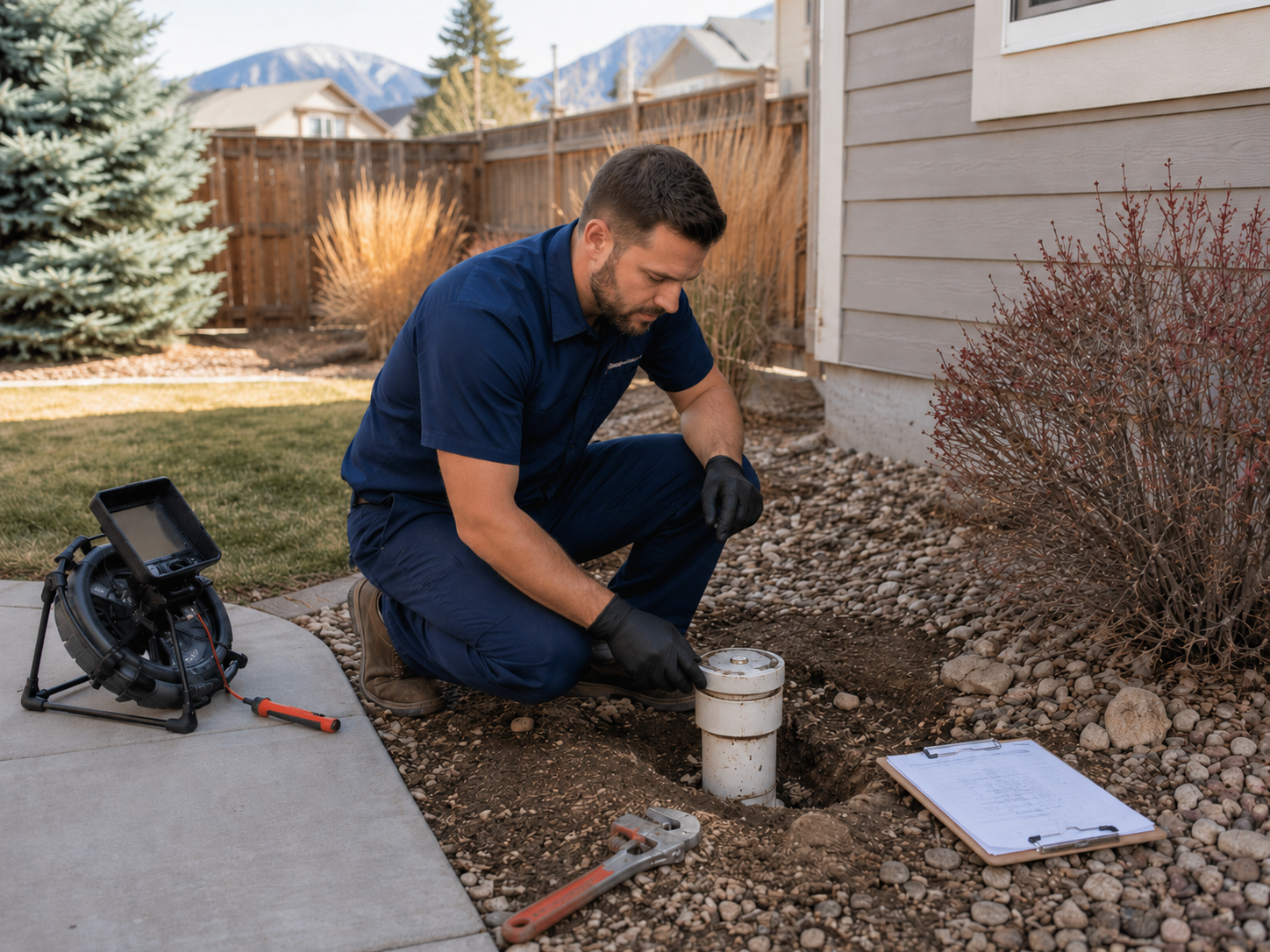
 A failing sewer line rarely waits for a convenient moment. One day everything drains fine; the next, a toilet gurgles, the lowest drain in the house backs up, or a soggy patch appears in the yard. If you’re searching for sewer line repair in Littleton, CO, you’re already dealing with one of the more disruptive plumbing problems a home or building can face — and the right response now can save you thousands later.
Drain Pros Plumbing Denver helps Littleton homeowners, landlords, and commercial property owners diagnose, repair, and replace damaged sewer lines using both modern trenchless methods and proven traditional excavation. The goal is simple: find the real problem, fix it correctly the first time, and restore your property with as little disruption as possible.
Why Sewer Line Repair Matters in Littleton
Your main sewer line carries every drop of wastewater from your property to the municipal system. When it cracks, sags, separates, or clogs, the effects ripple through the entire building. Ignoring early warning signs usually turns a manageable repair into a full replacement — and a much larger bill.
The risks of a neglected sewer line go beyond inconvenience. Raw sewage backing up into a home is a genuine health hazard. Chronic leaks underground can saturate soil, undermine foundations, and attract pests. For commercial and multi-unit buildings, a sewer failure can force a shutdown, trigger tenant complaints, and create liability. Acting early protects your health, your property value, and your wallet.
Littleton’s mix of mature neighborhoods and newer developments means sewer lines here range from decades-old clay and cast iron to modern PVC. Each material fails differently, and each calls for a different repair strategy. That’s why a proper diagnosis matters more than a quick guess.
Common Problems Sewer Line Repair Solves
Most calls we receive trace back to a handful of recurring issues. Recognizing the symptoms early helps you act before a small problem becomes an emergency.
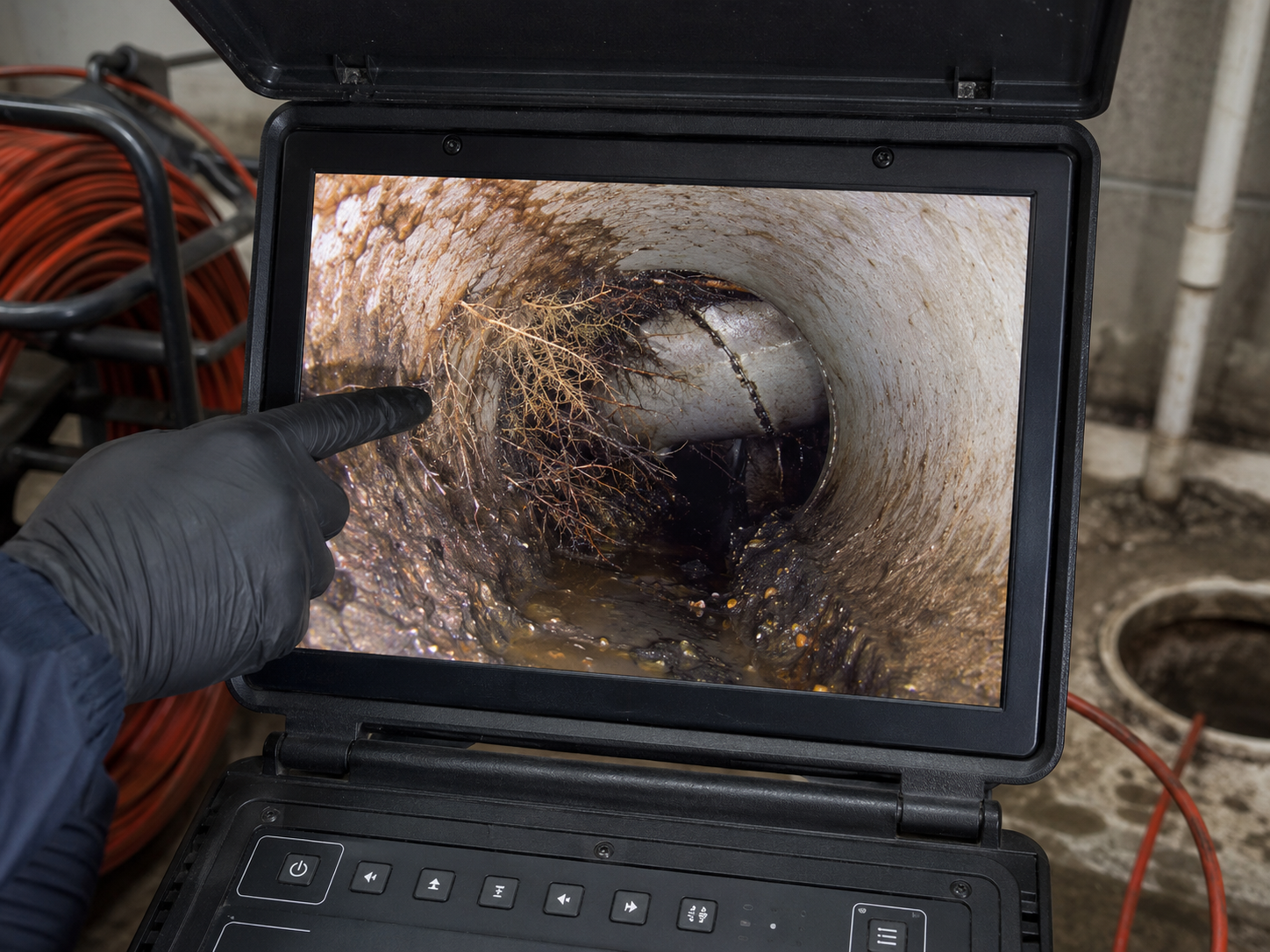 Tree root intrusion. Roots are drawn to the moisture and nutrients inside sewer pipes. They work their way through tiny joints and cracks, then expand until they block flow or break the pipe outright. This is one of the most common causes of sewer failure in established Littleton neighborhoods with mature trees.
- Cracked, collapsed, or “bellied” pipes. Ground shifting, freeze-thaw cycles, and aging materials can crack pipes or create a low spot (a “belly”) where waste and debris collect, causing repeat clogs.
- Corrosion and aging materials. Older cast iron and clay lines deteriorate over time. Corrosion narrows the pipe, weakens the walls, and eventually leads to leaks or collapse.
- Persistent, multi-drain backups. When several fixtures back up at once — or the lowest drain floods when you run water elsewhere — the problem is usually in the main line, not a single fixture.
- Sewer gas odors and soggy yard patches. A rotten-egg smell indoors or an unusually green, wet, or sunken area in the yard often signals an underground leak.
If any of these sound familiar, a quick read through our guide on how to know if you need a sewer line replacement in Denver can help you tell the difference between a simple clog and a structural failure. When the trouble is a stubborn blockage rather than a broken pipe, targeted drain cleaning or high-pressure hydrojetting may clear the line without major work.
Our Sewer Line Repair Process
A reliable repair starts with an accurate diagnosis — not a sales pitch. Here’s how we approach the job from the first call to the final cleanup.
Step 1 — Inspection and diagnosis. We start with a camera-based sewer video inspection that lets us see inside the line in real time. This pinpoints the exact location, depth, and nature of the damage so you’re not paying to dig in the wrong place. You can learn more about why this matters in our overview of the benefits of sewer video inspection in Denver.
Step 2 — Clear written recommendations. Once we understand the problem, we explain your options in plain language — repair versus replacement, trenchless versus traditional, and what each path involves. You get the information you need to make a confident decision.
Step 3 — The repair. Depending on the situation, we may recommend a trenchless solution (such as pipe lining or pipe bursting) that minimizes digging, or a traditional spot excavation when that’s the better fit. Sewer work often overlaps with broader water, sewer, and gas line service, and we coordinate the full scope so nothing is left half-finished.
Step 4 — Testing and restoration. After the repair, we test the line to confirm proper flow and re-inspect where appropriate, then restore the work area as cleanly as conditions allow.
For a deeper look at what the experience is like from the homeowner’s side, our Denver sewer repair help guide walks through what to expect step by step.
Why Choose Drain Pros Plumbing
Choosing who handles your sewer line is as important as the repair itself. Here’s what sets our team apart for Littleton property owners.
- Accurate, camera-first diagnosis. We don’t guess. Video inspection means we fix the actual problem instead of digging up a yard on a hunch.
- Trenchless and traditional options. Because we offer both, our recommendation is based on what your pipe actually needs — not on the only method we happen to use.
- Residential and commercial experience. From single-family homes to multi-unit buildings and commercial properties, we scale the approach to the job.
- Local knowledge. We work across the Denver metro every day and understand how local soil, tree cover, freeze-thaw cycles, and older pipe materials affect sewer lines in this area.
- Straightforward communication. You’ll know what we found, what we recommend, and why — before any work begins.
Sewer repair is one piece of a larger plumbing system, and our sewer repair and general plumbing services give Littleton clients a single, accountable point of contact for whatever the inspection turns up.
Sewer Line Repair for Littleton and Nearby Areas
Littleton’s housing stock is part of what makes local sewer work distinctive. Established neighborhoods often feature mature trees with aggressive root systems and original clay or cast-iron sewer lines that have been in the ground for decades. Newer subdivisions tend to use PVC, which holds up well but can still suffer from ground movement, improper installation, or bellying over time.
Colorado’s freeze-thaw cycle adds another factor. Repeated freezing and thawing shifts soil and stresses underground pipes, which can open up cracks and joint separations that worsen each season. Combined with the area’s clay-heavy soils, these conditions make underground lines especially worth monitoring.
We provide sewer line repair across Littleton and the surrounding communities near it within the greater Denver metro area, so whether you’re managing a residence, a rental, or a commercial building, the same careful diagnostic process applies. Because Littleton sits within our broader sewer line repair Denver service footprint, response and coordination stay consistent no matter which neighborhood you’re in.
Cost, Timeline, and What to Expect
Every sewer line is different, so honest pricing starts with an inspection rather than a number over the phone. That said, here’s what generally drives the cost and timeline of a sewer line repair.
What affects the price depends on factors like the length of pipe affected, how deep the line is buried, the pipe material, the cause of the damage (a single root intrusion versus a fully collapsed line), and whether trenchless or traditional excavation is the better method. Permitting and accessibility — for example, repairs under a driveway or mature landscaping — can also influence the final figure.
Timeline can range from a same-day spot repair for a localized issue to a multi-day project for a full line replacement. A camera inspection typically takes under an hour and is the fastest way to get a realistic estimate. Minor blockages discovered during inspection may even be resolved on the spot.
What to expect: clear findings, written options, and no surprise scope changes once work is underway. For homeowners weighing whether a problem is urgent, our guide on the benefits of hydro jetting for clogged drains can help you understand when cleaning solves the issue and when repair is the smarter long-term move.
Get Your Sewer Line Inspected and Repaired — Call Drain Pros Plumbing Today
Don’t wait for a slow drain to turn into a flooded basement or a collapsed line. If you need sewer line repair in Littleton, CO, the smartest first step is an accurate diagnosis from a team that fixes the real problem the first time. We’ll inspect the line, explain your options in plain language, and recommend the most cost-effective path forward — no guesswork, no pressure.
Call Drain Pros Plumbing now at (720) 664-8988 to schedule your sewer line inspection, request an estimate, or get help with an active backup. Your home, your tenants, and your property are worth protecting — let’s get it handled right.
Frequently Asked Questions
How do I know if I need sewer line repair or just a drain cleaning?
How do I know if I need sewer line repair or just a drain cleaning?
If a single fixture drains slowly, the issue is usually a localized clog that drain cleaning can solve. If multiple drains back up at once, you hear gurgling, smell sewer gas, or notice soggy spots in the yard, the problem is likely in the main sewer line and calls for inspection. A camera inspection is the only reliable way to tell the difference. We recommend starting there before committing to any repair.
What does sewer line repair in Littleton, CO typically involve?
What does sewer line repair in Littleton, CO typically involve?
It starts with a video camera inspection to locate and identify the damage. From there, repair may be done trenchless — using pipe lining or pipe bursting to minimize digging — or with a targeted excavation. The right method depends on the pipe’s material, depth, and the type of damage. After the repair, the line is tested to confirm proper flow before the area is restored.
Is trenchless sewer repair better than traditional digging?
Is trenchless sewer repair better than traditional digging?
Trenchless repair is often less disruptive because it requires little or no excavation, which protects landscaping, driveways, and walkways. It can be faster and cleaner in the right conditions. However, it isn’t suitable for every situation — a fully collapsed or severely misaligned pipe may require traditional excavation. A camera inspection determines which method fits your specific line.
How much does sewer line repair cost in the Denver area?
How much does sewer line repair cost in the Denver area?
There’s no flat rate, because cost depends on the length and depth of the affected pipe, the pipe material, the cause of the damage, and whether trenchless or traditional repair is used. Permitting and access can also factor in. The most accurate way to get a real number is a quick camera inspection, which pinpoints the problem so you only pay to fix what’s actually broken.
What causes sewer lines to fail in older Littleton homes?
What causes sewer lines to fail in older Littleton homes?
The most common causes are tree root intrusion, aging clay or cast-iron pipe that has corroded or cracked, and ground movement from Colorado’s freeze-thaw cycles. Older lines are especially prone to root infiltration at joints and to bellying, where a low spot collects debris and causes repeated backups. Regular inspection catches these issues before they become emergencies.
Can a damaged sewer line cause damage to my home or foundation?
Can a damaged sewer line cause damage to my home or foundation?
Yes. A leaking underground sewer line can saturate the surrounding soil, which over time may undermine slabs and foundations, attract pests, and create persistent odors. Sewage backups inside the home are also a health hazard. Addressing a failing line promptly limits the risk of structural and water damage spreading to other parts of the property.
How quickly can you respond to a sewer backup?
How quickly can you respond to a sewer backup?
Response time depends on scheduling and the nature of the problem, but a sewer backup is treated as a priority because of the health and property risks involved. The fastest path to resolution is a same-visit camera inspection so the cause is identified immediately. Call (720) 664-8988 to describe your situation and get the soonest available appointment.



