
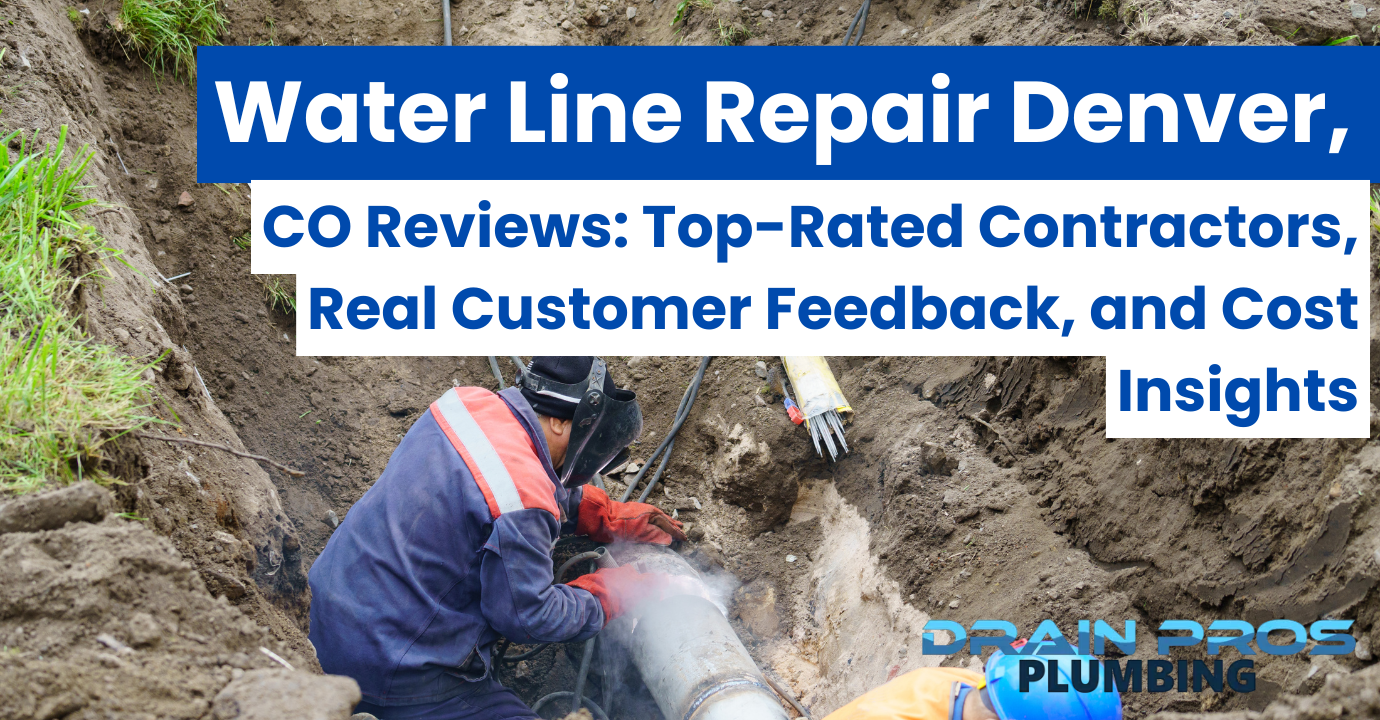
Executive Summary
Use water line repair Denver reviews as process evidence: the most trustworthy contractors are consistently described as proving leak location before digging, using code-compliant materials and burial-rated joints, coordinating 811 locates and permits, and completing disinfection plus post-repair pressure verification. Prioritize reviews that read like a documented job log, and treat repeated complaints about low pressure, settling, surprise add-ons, or “no permit needed” as high-risk patterns.
3 Core Insights
- Specific diagnostics predict fewer call-backs: Reviews that mention curb-stop/meter isolation, static pressure testing, meter movement checks, acoustic locating, or sectional isolation strongly indicate accurate leak confirmation and less unnecessary excavation.
- Paperwork and closeout steps separate pros from shortcuts: The best reviews explicitly confirm Colorado 811 locates, permit/inspection handling, and post-repair verification (pressure confirmation and, when applicable, chlorination/flushing and bacteriological clearance).
- Durability shows up in materials and restoration details: Credible feedback calls out copper/HDPE upgrades, tracer wire on non-metallic pipe, burial-rated compression/fusion joints, correct transition fittings, and properly compacted backfill with clear concrete/asphalt restoration scope.
Water line repair Denver reviews are customer-sourced evaluations that rank local contractors by leak-detection accuracy, trenchless capability, permit handling, price transparency, and warranty follow-through. In Denver, repairs often involve curb-stop valves near sidewalks, service lines running under driveways, and meter pits that flood during spring thaw. Reviews that mention “acoustic leak locating,” “static pressure test,” or “chlorination and bacteriological clearance” usually indicate a contractor followed standard diagnostic and disinfection steps. Strong feedback also references correct material matching, such as replacing aging galvanized sections with copper or HDPE, installing tracer wire on non-metallic pipe, and using compression or fusion joints rated for potable water. Cost insights in real reviews often separate mobilization, excavation depth, soil and asphalt restoration, and the difference between a short spot repair versus a full service-line replacement from meter to foundation. Denver-specific red flags include repeated call-backs for low pressure after repair, incomplete backfill that later settles under concrete, and vague “flat rates” that omit permitting, utility locates, and post-repair pressure verification.
How to Read Denver Water Service Line Reviews Like an Inspector
High-quality review patterns consistently map to the same technical checkpoints inspectors and utilities expect: verified leak location, code-compliant materials, permitted work, and documented disinfection. When you see those elements in write-ups, you’re not just reading “good service”—you’re reading evidence of correct process.
Use reviews to confirm whether the contractor performed steps that reduce repeat leaks and failed inspections:
- Location proof: Mentions of curb-stop confirmation, meter isolation, acoustic locating, tracer wire locating, or a recorded pressure decay test.
- System isolation logic: Notes that the technician shut off at the curb stop/meter, then verified whether the leak was on the customer side of the meter (a common Denver responsibility split).
- Restoration detail: Specifics on backfill lifts/compaction, base course replacement under concrete, or asphalt patching rather than “they filled the hole.”
- Water quality steps: Chlorination, flushing, and bacteriological clearance language (often required when a potable line is opened and returned to service).
- Paper trail: Permit pulled, utility locates completed (Colorado 811), inspection scheduled, and pressure verification performed after repair.
Denver-Specific Factors That Make Water Line Repairs Harder (and Reviews More Telling)
Denver repairs often intersect with sidewalk valve boxes, seasonal groundwater in meter pits, and service lines routed under driveways and stoops. Reviews that mention these constraints usually come from real, jobsite-specific experiences rather than generic praise.
Look for references to conditions that commonly affect outcomes in the metro area:
- Curb-stop access near sidewalks: Reviews that describe careful excavation around the valve box or avoiding damage to concrete flatwork often signal competent excavation planning.
- Spring thaw flooding: Meter pits that fill with water can complicate diagnosis; reviews noting “dewatered the pit” or “pumped it out before testing” indicate disciplined troubleshooting.
- Freeze-thaw and soil movement: Backfill quality matters; comments about later settling under a driveway are a major red flag if repeated across multiple reviewers.
- Older service line materials: Denver housing stock frequently includes galvanized steel and legacy copper. Good reviews often mention matching transitions correctly rather than “mix-and-match” repairs.
What the Best Reviews Reveal About Leak Detection Accuracy
Reliable reviews describe how the contractor proved the leak location before digging, not just that they “found it.” Accuracy matters because unnecessary excavation drives cost and increases the chance of damaging adjacent utilities.
Positive technical indicators to watch for:
- Static pressure testing: The line is isolated and pressurized; pressure drop over time supports an underground leak conclusion.
- Meter movement checks: With all fixtures off, meter register movement suggests a downstream leak.
- Acoustic listening: Ground microphones or correlators are used to narrow the dig point—especially useful in landscaped yards or under concrete.
- Sectional isolation: Reviews mentioning “tested from meter to house” versus “house plumbing tested fine” suggest the contractor separated the problem correctly.
If you want a deeper explanation of the tools and logic contractors should be using before excavation, see how plumbers detect hidden water leaks in Denver.
Permit Handling and Utility Locates: What Reviews Should Explicitly Confirm
Good feedback in Denver frequently mentions 811 utility locates and permit/inspection coordination because those steps are measurable and time-bound. If multiple reviews complain about delays or “failed inspection,” it often traces back to skipped paperwork or noncompliant installation details.
When evaluating reviews, verify these process markers are present:
- Colorado 811 locates completed before excavation: Reviews may say “they waited for locates” or “marked utilities first.” This is not optional—digging before locates increases strike risk and liability.
- Permit and inspection coordination: Strong reviews mention the contractor scheduled inspections and met the inspector on-site.
- Traffic/ROW considerations when applicable: If excavation extends toward the right-of-way, reviews may mention extra coordination or restrictions.
Materials and Connection Methods That Signal a Durable Repair
The most useful reviews mention pipe type, connection method, and transitions because those details directly affect longevity and inspection outcomes. Potable water service lines must use approved materials and fittings suitable for burial and pressure service.
Look for review language that aligns with standard industry practice for water service work:
- Material upgrades: Replacing galvanized sections (corrosion-prone and restrictive) with copper tubing or HDPE service pipe designed for potable water.
- Tracer wire on non-metallic pipe: Reviews that mention tracer wire indicate forward-thinking installation for future locating.
- Approved joints: Compression fittings rated for potable water and burial, or heat fusion/electrofusion joints where applicable for plastic service lines.
- Proper transitions: Correct dielectric or listed transition fittings when joining dissimilar metals to reduce galvanic corrosion risk.
For background on the trade scope and systems involved, it helps to understand what plumbing encompasses in residential infrastructure, including potable distribution, isolation valves, and underground service piping.
Trenchless vs. Excavation: How Reviews Signal the Right Method Was Chosen
Trenchless work can reduce surface disruption, but it is not universally appropriate; good reviews explain why a method was selected. The best contractors document constraints such as line depth, route conflicts, or the need to replace rather than spot-repair.
Use reviews to distinguish between method marketing and method fit:
- Trenchless is usually credible when reviews mention: minimal excavation pits, pulling new pipe along the same path, maintaining driveway integrity, and restoring only entry/exit locations.
- Open-cut excavation is usually justified when reviews mention: multiple failure points, collapsed line sections, severe corrosion, or rerouting required to meet clearance/slope/route needs.
A review that simply says “they did trenchless” without any description is less useful than one that states where pits were placed, what pipe was installed, and how the line was tested afterward.
Cost Transparency: What Real Reviews Break Out (and “Flat Rate” Reviews Often Hide)
Denver homeowners get the most accurate cost expectations from reviews that separate diagnostics, excavation, repair length, and restoration. Vague pricing feedback is less predictive because water line costs change drastically with depth, surface type, and access.
High-value reviews often itemize or at least mention these categories:
- Mobilization and emergency response: After-hours dispatch, same-day dig crew availability, and equipment staging.
- Diagnostic cost: Leak locating, pressure testing, and any camera/inspection add-ons.
- Excavation variables: Depth, shoring needs, and spoils hauling.
- Surface restoration: Concrete sawcut and replacement, asphalt patching, landscape repair, and compaction.
- Scope definition: “Spot repair” vs. “full service line replacement from meter to foundation.”
When reviews criticize “flat rate,” the common failure is omission—permit fees, locate coordination, restoration, or post-repair testing gets treated as a surprise add-on.
Core Specs & Local Process Checklist (Synthesized Table)
This table consolidates the practical, review-verifiable checkpoints that best predict a compliant, durable water line repair in Denver. Use it to compare what reviewers describe against what should happen on a properly run job.
| Feature / Metric | Specifications | Local Guidelines |
|---|---|---|
| Leak confirmation method | Isolate service line, perform static pressure test and/or acoustic locating; document results | Reviews should reference meter/curb-stop isolation and objective testing before excavation |
| Utility locate compliance | Call 811 before digging; mark conflicts and plan excavation accordingly | Colorado law requires utility notification prior to excavation; reviews often note “waited for locates” |
| Pipe material compatibility | Use approved potable service materials; use listed transition fittings for dissimilar materials; add tracer wire for non-metallic pipe when installed | Review language mentioning copper/HDPE upgrades and tracer wire is a strong quality signal |
| Joint type and burial rating | Use joints rated for potable water and direct burial (e.g., listed compression fittings or fusion where applicable) | Reviews that name joint style or “burial-rated fitting” indicate the contractor discussed technical choices |
| Disinfection and return-to-service | Chlorinate, flush, and verify potable safety where required; confirm system pressure and no leaks under load | Reviews that mention chlorination and bacteriological clearance suggest correct potable commissioning steps |
| Backfill and settlement control | Backfill in lifts and compact; restore base under flatwork to reduce settling | Denver red flag: repeated reviews about settling under concrete or driveway dips after repair |
Warranty Follow-Through: What Reviews Should Say After the Check Clears
Warranty strength is proven by post-repair behavior: rechecks, pressure verification, and fast response if symptoms recur. The most credible reviews describe what happened weeks later, not just day-of professionalism.
Look for these warranty-related signals:
- Clear warranty scope: Reviews mention what is covered (labor, materials, restoration) and what is excluded (pre-existing pipe outside the repair boundary, freeze events, third-party damage).
- Post-repair verification: Notes like “they returned to recheck pressure” or “confirmed no meter movement” indicate a complete closeout.
- Documentation provided: Invoice includes installed materials, repair location notes, permit/inspection references if applicable, and test results.
Denver Red Flags in Water Line Repair Feedback (What to Treat as a Pattern, Not a One-Off)
Negative reviews become actionable when multiple customers report the same failure mode: low pressure, repeat leaks, or settling restoration. These are not “preference” issues—they often point to skipped testing, poor transitions, or inadequate compaction.
Escalate caution if you see repeated mentions of:
- Low pressure after repair: Can indicate debris in the line, a partially closed curb stop, a damaged PRV, an undersized repair section, or a kinked service line.
- Immediate call-backs for leaks: Often tracks to improper joint installation, poor pipe prep, or failing to test under pressure before backfilling.
- “No permit needed” assurances: This can be incorrect depending on scope and jurisdiction; reviews that celebrate skipping permitting may indicate future resale/inspection problems.
- Unclear restoration responsibility: If reviewers say they had to hire a separate contractor to fix concrete/asphalt that was implied in the bid, that’s a scope control issue.
- Damage to adjacent utilities: Strikes to gas, electric, or communications lines are serious; repeated mentions suggest poor locate discipline and excavation control.
How to Use Reviews to Pre-Qualify a Contractor Before You Call
You can turn reviews into a screening tool by matching what people praised or criticized against a pre-call checklist. This avoids wasting time on bids that look cheap but omit essential steps like locates, permits, or disinfection.
Before requesting an estimate, shortlist contractors whose reviews repeatedly mention:
- Objective diagnostics (pressure testing, acoustic locating, clear isolation steps).
- Defined scope (spot repair vs. full replacement, meter-to-foundation clarity).
- Transparent restoration (concrete/asphalt/landscape spelled out).
- Code-oriented materials (copper/HDPE, tracer wire, burial-rated fittings).
- Closeout testing (pressure verification and clear return-to-service steps).
If you also suspect pressure-related issues after a repair or during diagnosis, consider reviewing the water pressure regulators service page to understand how PRV condition can mimic (or compound) underground service line problems.
Field-Tested Takeaway: What the Most Trustworthy Denver Reviews Have in Common
The most reliable water line repair evaluations in Denver read like a project log: test, locate, excavate safely, install approved materials, disinfect, verify pressure, and restore surfaces correctly. When reviews consistently include those elements, they’re strong predictors of fewer call-backs, smoother inspections, and a service line that won’t settle or leak again after the first thaw.
To rank contractors using reviews alone, prioritize specificity over sentiment:
- Best: Reviews with diagnostic terms, materials used, method choice rationale, restoration detail, and post-repair verification.
- Acceptable: Reviews that at least confirm locates, a clear scope, and documented testing before backfill.
- High risk: Repeated reports of low pressure, settling, surprise add-ons, or unclear responsibility for permitting and restoration.
When you treat reviews as evidence of procedure—not just customer satisfaction—you end up choosing the contractor most likely to deliver a durable, compliant repair under Denver’s real-world conditions.
Frequently Asked Questions
Don’t Let a “Small” Water Line Leak Turn Into a Big Denver Excavation Bill
Water service line problems in Denver don’t fail politely. A misdiagnosed leak can mean digging in the wrong spot, breaking through driveway concrete, flooding a meter pit during spring thaw, or triggering repeat low-pressure issues that never quite go away. And when the work isn’t handled correctly—811 locates skipped, permits ignored, disinfection rushed, or backfill left uncompacted—you’re not just paying for a repair. You’re paying for the call-back, the restoration, the settlement under your flatwork, and the stress of wondering what’s happening underground.
This is exactly where a seasoned local pro earns their keep: proving the leak location before excavation, matching materials correctly (no shortcut transitions), using burial-rated joints, coordinating permits and inspections, and verifying pressure and water quality before they close the job. That’s how you avoid the Denver-specific red flags that show up later—meter pit water, curb-stop complications, and patchwork repairs that don’t survive the next freeze-thaw cycle.
If you want a water line repair that’s done once, documented clearly, and restored the right way, get a contractor who treats the process like an inspection—not a guess.



