
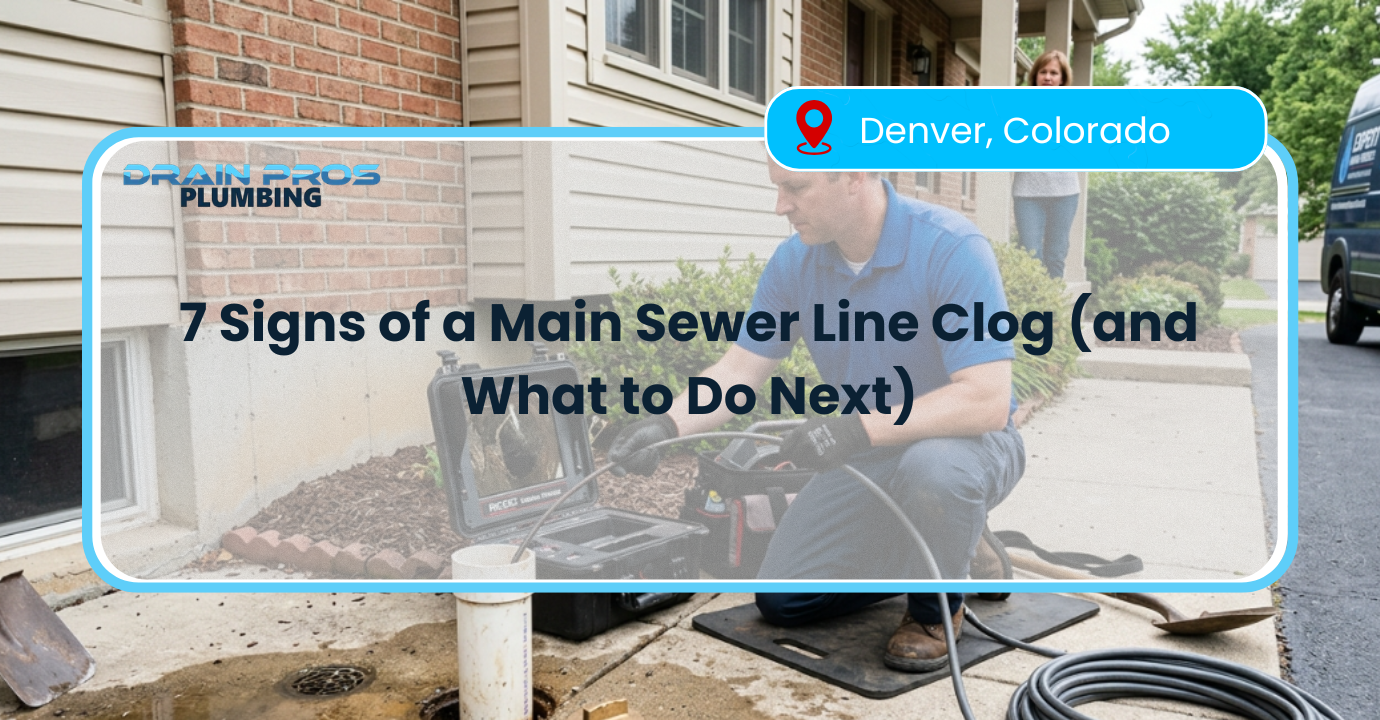
Executive Summary
Signs of a Main Sewer Line Clog are confirmed when multiple fixtures across different rooms or levels drain slowly, gurgle, or back up—especially at the lowest drains—because the restriction is in the shared main building drain or sewer. The definitive path to resolution is to stop water use to prevent overflow, access the main cleanout for controlled diagnosis, and use professional clearing and (when recurring) camera inspection to match the fix to the actual cause.
Core Insights
- System-Wide Symptoms Mean Main Line: When separate fixtures (kitchen, bath, laundry) show slow drains or backups at the same time, the common downstream pipe is restricted rather than a single branch or trap.
- Lowest-Point Backup Is the Strongest Indoor Sign: Sewage showing up in a basement floor drain, first-floor shower/tub, or other low opening indicates the main can’t accept flow and is surcharging backward through the drainage network.
- Verification Prevents Repeat Failures: Clearing restores flow, but recurring clogs typically require camera confirmation to identify roots, offsets, bellies, cracks, or collapse so repair decisions address the structural cause.
Signs of a Main Sewer Line Clog are repeated drain backups, widespread slow drainage, sewer odors, gurgling pipes, and wet or contaminated areas caused by a blockage in the primary sewer pipe leaving the building. A main line problem usually shows up in multiple fixtures at once, such as a first-floor toilet overflowing while the shower and kitchen sink also drain slowly. You may hear gurgling in a tub trap when a toilet flushes, which can indicate air being pushed back through branch lines. Sewer gas odors near floor drains, a basement cleanout, or a laundry standpipe can point to trapped waste and loss of normal venting flow. Outdoors, pooling water, spongy soil, or a strip of unusually green grass above the sewer route can indicate a leak or surcharge from a clogged or collapsed section. In cold climates, a sudden winter backup can follow a frost-related belly in the pipe where solids settle. In older neighborhoods, clay or cast-iron lines can narrow from scale, offsets, or root intrusion, which a camera inspection can confirm by showing cracks, joints with roots, or standing water. Next steps usually start with limiting water use, checking whether the issue is affecting the whole building, and locating the main cleanout for controlled access before a professional diagnosis and clearing method is chosen.
Why a Main Sewer Line Clog Acts Differently Than a Fixture Clog
A blockage in the building sewer affects every branch drain because all fixtures ultimately discharge into the same pipe. A single-fixture clog usually stays isolated because it’s downstream of only that one trap and branch line.
A sink trap or shower trap clog will typically cause problems only at that fixture (or a nearby fixture on the same small branch). By contrast, the main sewer line is the final pathway from the building drain to the municipal sewer (or to a private septic connection), so restrictions there create system-wide symptoms: multiple slow drains, backups at the lowest fixtures, and air displacement (gurgling) across the network.
- Fixture clog: localized slow drain, no widespread odors, no impact on other floors/rooms.
- Main line clog: multiple fixtures affected, backups at lowest openings, possible outdoor surfacing.
High-Confidence Warning Signs Inside the Home
When several fixtures act up at the same time, the drainage system is telling you the restriction is beyond individual branch piping. The most diagnostic indoor signs are “lowest-point backup,” cross-fixture gurgling, and repeated sewage odor near drains.
1) Backups at the Lowest Plumbing Openings
If sewage appears in a basement floor drain, first-floor shower, or ground-level tub, the blockage is typically in the main building drain or building sewer. Waste follows gravity, so the lowest openings spill first when the line can’t accept flow.
- Basement floor drain overflow after using a toilet or running laundry
- First-floor tub/shower backing up when an upstairs toilet flushes
- Water rising in a shower pan during washing machine discharge
2) Multiple Slow Drains Across Different Rooms
Slow drainage in a bathroom plus the kitchen (or laundry) at the same time points to a shared downstream restriction. The main line is the common denominator when separate branch lines show the same symptom.
- Kitchen sink drains slowly while a tub on the other side of the house also lags
- Toilet seems “lazy” (slow to clear) and nearby sink gurgles
- Laundry standpipe drains sluggishly even when the washer pump is working normally
3) Gurgling Sounds After Toilet Flushes or Appliance Discharge
Gurgling is usually air being forced to move where it shouldn’t because flow is restricted downstream. When the main drain is partially blocked, water movement can siphon traps or push air back through branch lines.
- Bathtub gurgles when a toilet flushes
- Kitchen sink burps air while the dishwasher drains
- Floor drain makes bubbling noises during laundry discharge
4) Sewer Odors Near Floor Drains, Cleanouts, or Utility Areas
Sewer gas odors indoors can indicate trapped waste, disturbed trap seals, or backpressure affecting normal venting behavior. Persistent odor near a basement cleanout or floor drain is especially concerning when paired with slow drains.
- Confirm the floor drain has water in the trap: a dry trap can allow odor even without a clog.
- Note timing: odor that worsens during fixture use suggests pressure changes from a restriction.
- Look for residue lines: staining around a drain can indicate prior surcharging events.
For a basic definition of how drainage and venting work together in building systems, see plumbing.
Outdoor Red Flags Along the Sewer Route
When the blockage or failure point is outside the foundation, symptoms may appear in the yard before (or in addition to) interior backups. The most reliable outdoor indicators are surfacing wastewater, persistent soggy soil, and abnormal vegetation growth.
- Pooling or surfacing water: standing gray/brown water near the sewer path or cleanout cap
- Spongy ground: soft soil that doesn’t dry out in normal weather
- Unusually green strip of grass: nutrient-rich leakage directly above the line
- Odor outdoors: sewage smell near the building sewer alignment, especially after heavy water use
Most Common Causes: What Actually Blocks a Main Sewer Line
Main line clogs are usually caused by roots, pipe deterioration, or heavy buildup that narrows the pipe diameter. The cause matters because the correct clearing method depends on whether the issue is soft buildup, structural damage, or invasive roots.
Root Intrusion at Joints or Cracks
Tree and shrub roots enter through joints, offsets, and fractures because moisture and nutrients attract them. This is especially common in older clay tile sewers and in lines with minor separations.
- Roots can create a “net” that catches paper and solids.
- Repeated snaking without addressing regrowth can lead to frequent recurrences.
Grease, Soap, and Sludge Accumulation
Fats, oils, and grease cool inside the pipe and harden, trapping food particles and debris. Over time this creates a reduced effective diameter, leading to slow drains progressing to full blockage.
- Common in kitchen-heavy households and multi-unit buildings.
- Often worsens after hot water use temporarily “softens” grease and it re-solidifies downstream.
Scale, Corrosion, and Offsets in Cast Iron or Clay
Cast-iron drain lines can develop interior scaling (tuberculation) that restricts flow and catches waste. Clay tile can shift at joints, creating ledges that snag paper and solids.
- Cast iron: narrowing from scale; rough interior accelerates buildup.
- Clay: joint offsets and cracks; root entry is common.
Cold-Weather Effects: Bellies and Settling Solids
In freeze-prone regions, ground movement and frost can worsen existing sags (“bellies”) where water stands and solids settle. A belly is not a temporary clog—it’s a grade issue that camera inspection can document by showing standing water.
Immediate Steps to Take (and What Not to Do)
Correct first actions reduce property damage and keep the blockage from turning into a sewage spill. The key priorities are limiting flow, identifying the scope, and avoiding chemical or high-volume “tests” that trigger overflow.
Do This First: Damage Control Checklist
Stop adding water to the system and determine whether the issue is localized or building-wide. If you have a usable cleanout, that is the safest controlled access point for diagnosis and clearing.
- Stop water use: no showers, laundry, dishwashers, or extended faucet running.
- Check multiple fixtures: test one sink and one toilet on the lowest level (briefly).
- Locate the main cleanout: typically near the foundation wall, basement, or outside.
- Protect low areas: keep valuables off basement floors; use towels/containment if needed.
Avoid These Common Mistakes
Certain DIY actions increase risk of flooding or pipe damage. The most problematic are repeated chemical drain cleaners and continuous plunging when multiple fixtures are affected.
- Do not use chemical drain openers: they are hazardous during backups and can complicate professional clearing.
- Do not run the washer “to see if it clears”: it dumps a large volume quickly and commonly triggers overflow.
- Do not keep flushing: toilets can rapidly surcharge the lowest drain when the main is restricted.
How Professionals Confirm the Location and Cause
Accurate diagnosis depends on verifying where the restriction is and whether the pipe is structurally sound. The standard process is to inspect via cleanout access and document conditions with a camera when recurring or severe symptoms are present.
Controlled Access Through a Cleanout
A properly located cleanout allows the technician to relieve pressure and evaluate flow without removing fixtures. If no cleanout exists or it’s buried/damaged, installing or uncovering one may be required for safe service.
Camera Confirmation (Best for Recurring Backups)
Video inspection pinpoints roots, offsets, cracks, bellies, and standing water so the repair plan matches the actual defect. It also differentiates between a simple obstruction and a line that is failing structurally.
- Shows root masses at joints
- Identifies collapsed sections or severe deformation
- Documents bellies (standing water)
- Locates foreign objects or heavy buildup zones
Treatment Options: Clearing vs Repair (and When Each Applies)
Clearing methods remove obstructions, while repairs correct structural defects that cause repeated failures. The right choice depends on whether the pipe is intact and properly graded.
| Feature / Metric | Specifications | Local Guidelines |
|---|---|---|
| Mechanical auger (main-line cable) | Cuts through soft blockages and some roots; restores flow but may leave residue on pipe walls. | Use through a main cleanout when available; avoid through fragile fixtures if multiple drains are affected. |
| High-pressure water jetting | Scours pipe interior to remove grease, sludge, and scale; highly effective for restoring full diameter when pipe is structurally sound. | Best paired with camera verification; not a substitute for correcting bellies, offsets, or collapses. |
| Video inspection documentation | Confirms root entry points, cracks, sags, and break locations; supports targeted repair decisions. | Recommended for repeat backups, older clay/cast iron, or prior history of root intrusion. |
| Spot repair or replacement | Replaces failed sections (collapsed, offset, or severely cracked); resolves chronic recurrence caused by structural defects. | Typically requires permit and inspection when replacing building sewer segments; confirm requirements with the Authority Having Jurisdiction (AHJ). |
If the inspection indicates a buildup-dominant problem and the pipe is intact, Hydrojetting is commonly selected to remove grease and sludge from the full interior wall rather than only punching a hole through the blockage.
When a Clog Suggests a Bigger Problem (and Why It Matters)
Repeated main line backups often indicate a structural defect, not just bad luck. If a camera shows standing water, offsets, or fractures, clearing alone usually provides temporary relief while damage progresses.
Indicators of Structural Failure
These findings point toward repair planning rather than repeated clearing calls. The goal is to stop sewage events and protect the building and yard from contamination.
- Standing water in the pipe: indicates a belly/sag where solids settle.
- Separated joints / offsets: creates ledges that snag debris repeatedly.
- Cracks with active root entry: recurring root masses even after cutting.
- Deformation/collapse: persistent backups and inability to maintain an open pathway.
Related Risk: Hidden Water Damage vs Drainage Failures
Not all wet basements are from sewer backups, and not all foundation moisture is from groundwater. If you’re comparing symptoms, the mechanisms described in how slab leaks affect home foundations help distinguish pressurized supply leaks from drainage system overflows.
Prevention and Long-Term Control for Homes with Prior Backups
Preventing a repeat event requires matching prevention to the known cause: grease control for kitchen buildup, root management for invasive lines, and scheduled verification for aging materials. The most effective plans combine habit changes with periodic condition checks.
Operational Habits That Reduce Main Line Loading
Small behavior changes reduce solids accumulation and prevent grease mats that narrow the pipe. These steps are especially important for older cast iron, clay tile, or lines with marginal slope.
- Dispose of cooking grease in sealed containers—never down the drain.
- Use drain screens to keep food scraps and hair out of branch lines.
- Flush toilets with appropriate paper only; avoid wipes (even “flushable”).
- Space out high-volume discharges (laundry + shower + dishwasher simultaneously increases surcharge risk).
Maintenance Triggers That Justify a Planned Inspection
Certain property conditions justify proactive camera inspection rather than waiting for an emergency backup. This is a risk-based approach used in property management and older housing stock.
- Home built with clay tile or cast iron building sewer
- Large mature trees near the sewer alignment
- History of backups more than once
- Recent purchase with unknown sewer condition
Clear Next Steps When You Suspect a Main Line Blockage
A main sewer issue is confirmed by multi-fixture symptoms and lowest-point backups, and it should be treated as a contamination and property-damage risk. The fastest path to resolution is to limit water use, access the cleanout, and verify conditions with professional-grade diagnostics so clearing or repair matches the actual defect.
- If multiple fixtures are affected: stop water use immediately and avoid “testing” with laundry or repeated flushes.
- If sewage is present: keep people and pets away from the area and prevent spread into finished spaces.
- If the problem recurs: prioritize camera verification to identify roots, offsets, bellies, or collapse rather than repeating the same clearing method.
- If outdoors shows pooling/odor: treat it as a likely building sewer surcharge and plan for inspection and targeted correction.
Frequently Asked Questions
Stop Guessing—Main Sewer Line Issues Don’t “Work Themselves Out”
When multiple drains slow down, gurgle, or back up at the lowest fixture, you’re no longer dealing with a simple clog—you’re dealing with the one pipe your entire home depends on to move wastewater out safely. And the longer you “test it” by running water, flushing, or starting laundry, the more likely you are to trigger a full sewage overflow into a shower, tub, basement floor drain, or utility area.
DIY attempts can quickly turn an inconvenient backup into a contaminated cleanup, damaged flooring and drywall, and a much larger bill. Chemical drain openers can create hazardous conditions for anyone working on the line, repeated plunging can force wastewater into places it shouldn’t be, and random snaking without verifying the cause can leave roots, grease mats, or a failing pipe section untouched—so the problem returns, usually at the worst possible time.
If this is a main sewer line restriction, you need controlled access through the right cleanout, the right clearing method for the blockage type, and—when it’s recurring—camera confirmation to rule out bellies, offsets, cracks, or collapse. That’s how you stop the cycle of repeat backups and protect your home from preventable damage.



