
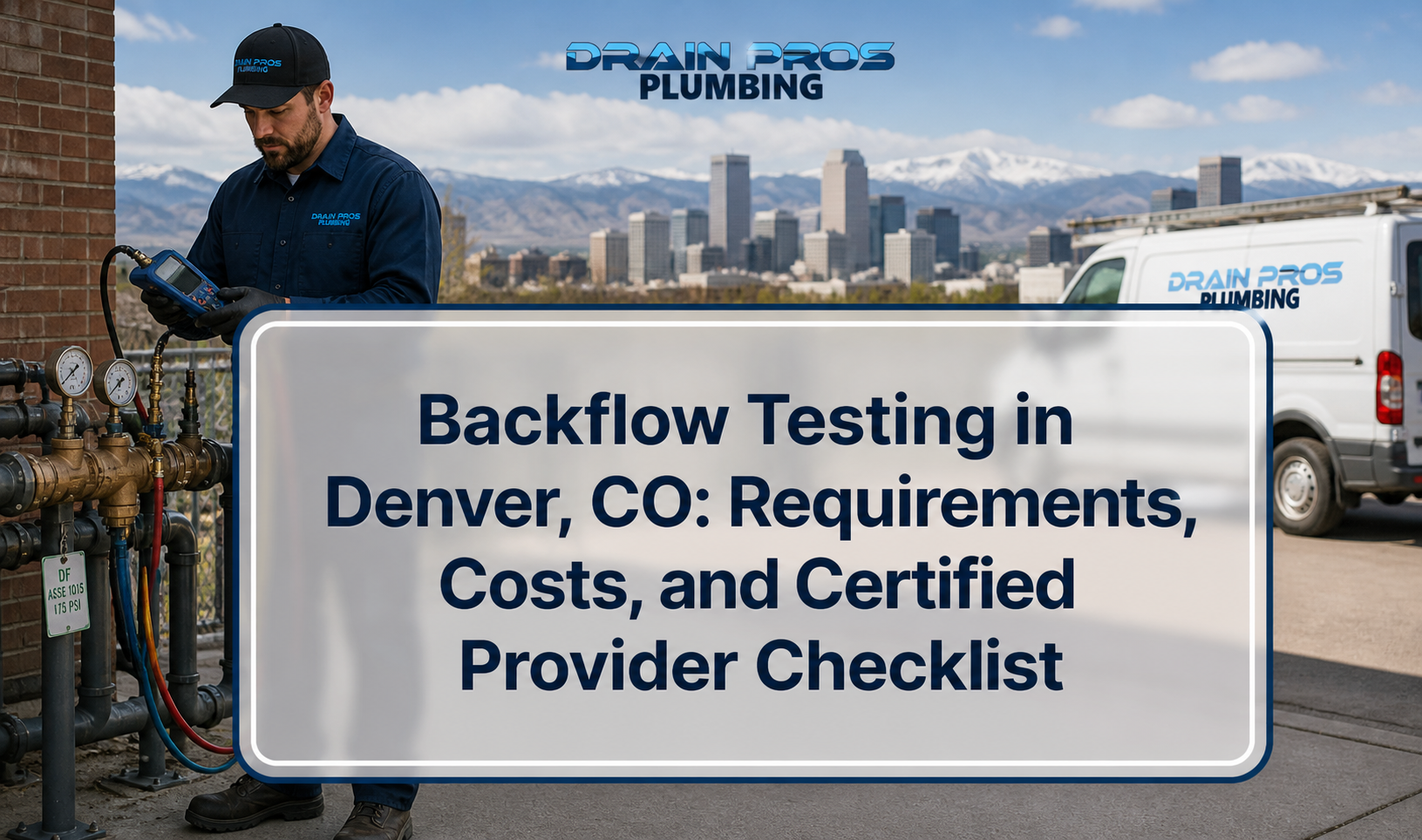
Executive Summary: Backflow Testing Denver compliance is best achieved by installing the correct backflow prevention assembly for the site’s hazard level, completing certified annual testing with calibrated equipment, and submitting complete, accurate reports to the correct local program on time. Properties that plan ahead for access, documentation, and potential repairs avoid failed submissions, retesting delays, and enforcement actions.
- Compliance Is Deadline-Driven: Denver Water and local jurisdictions commonly require annual testing for testable assemblies, and late or incomplete reports can trigger notices, fees, or correction timelines.
- Device Type Must Match Hazard: DCVAs are typically used for low-to-moderate hazards while RPZ assemblies are typically required for high-hazard connections because their relief valve provides stronger contamination protection.
- Accurate Testing + Reporting Prevents Rework: Using a certified tester with a currently calibrated differential pressure gauge and complete device identification details reduces rejected reports, repeat visits, and prolonged non-compliance after failures.
Backflow testing is the required verification that a plumbing backflow prevention assembly is stopping contaminated water from reversing into the public drinking water system in Denver, Colorado. Backflow Testing Denver is commonly required for commercial properties, irrigation systems, multifamily buildings, and any site with a cross-connection hazard. Denver Water and local jurisdictions typically require an annual test for testable devices like reduced pressure principle assemblies (RPZ/RPBA) and double check valve assemblies (DCVA), with stricter oversight for high-hazard conditions. High-hazard examples include boiler feed lines with chemical treatment, restaurant beverage machines with carbonators, medical or dental vacuum and sterilization equipment, hydronic heating loops, and car wash reclaim systems. Moderate-hazard examples include lawn irrigation with fertilizer injection, fire sprinkler lines with antifreeze or booster pumps, and commercial mop sinks with chemical dispensers. A certified tester uses a calibrated differential pressure gauge to record opening pressures, check valve tightness, and relief valve function, then documents the device make, model, size, serial number, location, and pass/fail results for reporting. Typical local cost drivers include device type (DCVA vs RPZ), size (3/4-inch irrigation vs 2-inch commercial), accessibility (vaults, pits, rooftops), winterization needs, and whether repairs, rebuild kits, or retesting are required after a failed result. This guide summarizes Denver-area requirements, realistic cost ranges, and a checklist to confirm a provider is properly certified, insured, equipped, and prepared to file accurate test reports on time.
What Denver Water and Local Codes Require for Backflow Compliance
Backflow compliance in the Denver metro area is driven by the need to protect the potable distribution system from cross-connections. In practice, that means installing the correct protection method for the hazard level and completing testing and reporting on the schedule required by the water purveyor.
In Denver, the public water supplier’s cross-connection control program establishes whether a backflow preventer must be installed, what type is acceptable (for example, a reduced pressure principle assembly vs. double check), and how often a test report must be submitted. Local plumbing rules also align with widely adopted standards from the International Plumbing Code (IPC) and industry test procedures such as USC Foundation for Cross-Connection Control and Hydraulic Research (USC FCCCHR) field test methods for testable assemblies.
- Property owner responsibility: Maintain the assembly in working order, keep it accessible, and ensure tests are completed and filed on time.
- Tester responsibility: Hold the required certifications for backflow assembly testing, use a current calibrated gauge, and submit complete and accurate test documentation.
- Why annual testing is common: Testable assemblies contain internal check valves, shutoff valves, and (for RPZs) a relief valve that can foul, scale, or wear—especially in irrigation and high-mineral water conditions.
Which Properties Commonly Need Annual Backflow Testing in Denver
Backflow testing is most frequently required wherever a cross-connection exists or could reasonably be created by connected equipment. The highest testing volume comes from irrigation, commercial plumbing systems, and multifamily buildings.
Sites and systems that commonly trigger required testing include:
- Commercial buildings: Restaurants, healthcare, manufacturing, laboratories, breweries, car washes, laundries.
- Irrigation systems: Sprinklers, drip systems, fertilization/chemical injection setups, or any irrigation tied into domestic water.
- Multifamily and mixed-use: Shared domestic services, boiler systems, hydronic heating loops, and common area irrigation.
- Fire protection: Systems with booster pumps, antifreeze, or other additives that can elevate hazard classification.
Because cross-connection risks often change when tenants change or equipment is added, many facilities also implement scheduled internal audits alongside the required annual field test.
Device Types You’ll See Most Often (DCVA vs. RPZ) and What They Protect Against
The assembly type is selected based on hazard severity and whether backpressure, backsiphonage, or both could occur. The two most common testable assemblies in Denver are DCVAs for low-to-moderate hazard and RPZs for high hazard.
Core differences that matter for compliance and performance:
- Double Check Valve Assembly (DCVA): Two internally loaded check valves in series; typically applied where pollutants (non-health hazards) are possible but not classified as severe contaminants.
- Reduced Pressure Principle Assembly (RPZ/RPBA): Two checks plus a relief valve that discharges to atmosphere if the differential pressure drops; used where contaminants could cause illness or create a significant health hazard.
- Pressure Vacuum Breakers (PVB) / Spill-Resistant Vacuum Breakers (SVB): Common on irrigation, typically for backsiphonage only; many are testable and may still fall under annual test programs.
Selection is not “preference-based.” Denver Water or the authority having jurisdiction (AHJ) will generally require the minimum device type that meets the hazard classification, and high-hazard connections typically lead to RPZ requirements due to their fail-safe relief function.
What Happens During a Certified Backflow Test (Step-by-Step)
A certified test follows standardized procedures to verify check valve closure, opening pressures, and relief valve operation (if present). The test result is recorded as pass/fail with measured readings and complete device identification details.
A realistic field workflow for testable assemblies includes:
- Locate and identify the assembly: Confirm make, model, size, serial number, and exact installation location.
- Verify accessibility and condition: Ensure test cocks and shutoffs operate; note missing tags, flooding, corrosion, or unsafe access.
- Connect a calibrated differential pressure gauge: Use clean hoses and fittings to prevent fouling test ports.
- Run the test sequence:
- Check valve #1 tightness / differential pressure reading
- Check valve #2 tightness / differential pressure reading
- RPZ only: relief valve opening point and discharge behavior
- Restore service carefully: Reopen shutoffs slowly to reduce water hammer and debris intrusion.
- Document results for submittal: Provide all required readings, pass/fail determination, and tester credentials.
If the assembly fails, the tester typically documents which component failed (e.g., check #2 not holding, relief valve opening too low/high) and recommends repair or rebuild followed by a retest.
Denver-Area Cost Ranges and the Real Drivers Behind Pricing
Backflow testing prices vary because the work is part certification, part documentation, and part site logistics. The most consistent cost drivers are device type/size, number of devices on-site, and accessibility constraints like vaults or rooftops.
Common factors that legitimately change the invoice:
- Assembly type: RPZs take longer to test than DCVAs and can require discharge management during testing.
- Size: 3/4″–1″ irrigation devices are typically quicker than 2″–4″ commercial assemblies.
- Location and access: Below-grade vaults, tight mechanical rooms, roof access, or devices behind tenant spaces.
- Winter conditions: Frozen vault lids, iced enclosures, or required winterization steps to prevent damage.
- Fail-and-retest: A failed assembly requires parts, labor, and a documented retest (often required for compliance closure).
- Reporting complexity: Multi-device properties, campus environments, or inconsistent device records that require reconciliation.
For budgeting, ask for pricing that clearly separates: test fee, repair authorization thresholds, parts markup policy, and retest fee.
Compliance Table: Test Metrics, Documentation, and Local Handling
This table consolidates the main technical and administrative data points that determine whether a test is accepted. Use it as a checklist when reviewing test reports and selecting a provider.
| Feature / Metric | Specifications | Local Guidelines |
|---|---|---|
| Assembly identification | Make, model, size, serial number, and device type (e.g., DCVA, RPZ); exact physical location on site | Test reports are typically rejected or delayed if critical ID fields are missing or inconsistent with utility records |
| Test instrument calibration | Differential pressure gauge with current calibration verification (per manufacturer/industry practice) | Utilities and AHJs commonly require testers to maintain calibration records and produce them upon request |
| Recorded readings | Measured results for check valves and (if applicable) RPZ relief valve function; pass/fail determination | Readings must match the assembly test procedure used; incomplete fields can trigger resubmittal |
| Shutoff/test cock condition | Shutoffs operate and hold; test cocks are functional and not plugged/corroded | If valves are inoperable, repairs may be required before a valid test can be completed |
| Submission timing | Test completed within required interval; report filed with the correct water provider/program | Late or missing reports can create enforcement actions such as notices, fees, or required correction timelines |
Failing a Backflow Test: What It Means and How Corrections Are Verified
A failed test means the assembly did not meet its performance criteria during the field procedure, so it cannot be relied on as an approved barrier. Compliance is generally restored only after repair and a passing retest documented in a new report.
Frequent failure causes in Denver-area conditions:
- Debris on check seats: Sand, scale, or irrigation particulate prevents tight closure.
- Worn check modules: Springs weaken or seals degrade from age and water chemistry.
- Relief valve issues on RPZs: Nuisance discharge, failure to open at the required setpoint, or fouled sensing lines.
- Shutoff valves not holding: Prevents accurate testing and can mask internal problems.
Best-practice correction workflow:
- Shut down and secure the system (especially irrigation zones or tenant spaces).
- Rebuild with manufacturer-listed parts kits or replace modules as appropriate.
- Flush the line where feasible to remove debris sources (sediment from irrigation lines is a common repeat offender).
- Complete a full retest and submit the passing report for closure.
Provider Vetting Checklist: Certification, Insurance, and Reporting Accuracy
The fastest way to avoid rejected reports and repeat visits is to verify credentials and documentation practices before scheduling. Your goal is a tester who can both perform the test correctly and file it correctly.
Minimum vetting checklist for a Denver backflow tester:
- Tester certification: Confirm the individual performing the test (not just the company) holds a recognized backflow assembly tester certification accepted by the local program.
- Calibration discipline: Ask for gauge calibration status and how often calibration is performed.
- Proof of insurance: General liability is standard; larger commercial sites may also require workers’ compensation.
- Photo documentation practice: Provider should be able to photograph the serial tag, installation context, and any deficiencies.
- Reporting process: Confirm who submits the report, to which program, and what turnaround time is standard.
- Repair capability: If a device fails, verify they can source rebuild kits and schedule a retest quickly.
Also confirm the provider understands the broader building water system, because many cross-connection hazards are created by equipment changes—this is part of safe plumbing management, not just paperwork.
On-Site Preparation: What Owners and Facility Teams Should Do Before the Appointment
Pre-visit preparation reduces labor time and helps ensure a valid first-pass test, especially on commercial sites. The most common delays come from blocked access, unknown device locations, and shutoffs that can’t be operated safely.
Use this pre-test checklist:
- Confirm device locations: Provide a site map, riser diagram, or irrigation backflow enclosure locations.
- Clear access: Remove storage, unlock mechanical rooms, and ensure roof/vault access is approved.
- Notify occupants/tenants: Pressure fluctuations or short shutoffs may occur during the test.
- Identify downstream critical equipment: Dishwashers, boilers, medical equipment, or process lines that cannot be interrupted without coordination.
- Verify drains for RPZ discharge: Ensure an appropriate receptor/drainage strategy if the assembly may discharge during testing.
If the site has a history of pressure swings, it can be helpful to address baseline supply issues first; see how water pressure problems develop for the most common causes and warning signs.
When Backflow Issues Signal Bigger System Problems (And What to Do Next)
Recurring failures or frequent debris in backflow assemblies often indicates upstream pipe deterioration, line breaks, or significant sediment in the supply piping. Fixing the “symptom” (rebuild kits) without addressing the cause leads to repeat failures and more downtime.
Indicators you should investigate beyond the backflow assembly:
- Repeat failures within 12–24 months on the same assembly without major operational changes.
- Visible sand/grit during testing or clogged test cocks.
- Discolored water events after main work, irrigation startups, or pressure loss incidents.
- Water hammer and pressure spikes that coincide with check damage.
For sites where sediment, scale, or recurring blockage is impacting valves and fixtures, scheduling targeted drain cleaning can also reduce strain on building drainage and improve overall system reliability (especially in commercial kitchens and older multifamily properties where stoppages can complicate maintenance access).
Clear Takeaways for Staying Compliant in Denver
Denver-area backflow compliance comes down to correct assembly selection, a valid certified test using calibrated equipment, and timely submission of complete reports. Owners who track device inventories, keep assemblies accessible, and respond quickly to failures avoid enforcement issues and reduce repeat service costs.
Use this final action list to keep your program tight:
- Maintain a device log: Location, serial number, size, and last test date for every assembly.
- Schedule ahead of deadlines: Build in time for repairs and retesting if a device fails.
- Standardize access: Keys, codes, and roof/vault procedures documented for service teams.
- Fix root causes: Investigate recurring debris, pressure anomalies, or aging piping contributing to failures.
- Audit changes annually: Tenant improvements and equipment additions often create new cross-connection hazards that require re-evaluation.
Frequently Asked Questions
Schedule Certified Backflow Testing Before a Small Problem Becomes a Compliance Issue
Backflow compliance isn’t “set it and forget it.” It’s a deadline-driven requirement tied to public health—and when testing is late, incomplete, or rejected for missing details, it can trigger notices, added fees, and urgent re-testing under pressure. Worse, if the device is failing and no one catches it, a single cross-connection event can pull contaminants back into the potable system and expose your property to serious liability.
Trying to manage this without an experienced local backflow specialist is where things usually go sideways: the wrong device gets tested (or can’t be identified), the gauge isn’t properly calibrated, shutoffs won’t hold, access isn’t planned for vaults/rooftops, the report is submitted incorrectly, or a failure turns into multiple site visits because parts and retesting weren’t coordinated. The “cheap” option quickly becomes downtime, rework, and a compliance headache—especially for irrigation, commercial mechanical rooms, multifamily boiler systems, and any high-hazard connection where an RPZ failure isn’t something you want to discover after the fact.
If you want it handled cleanly—correct procedure, complete device documentation, realistic next steps if it fails, and reporting that doesn’t get kicked back—book a certified test with a Denver team that does this every day.



