
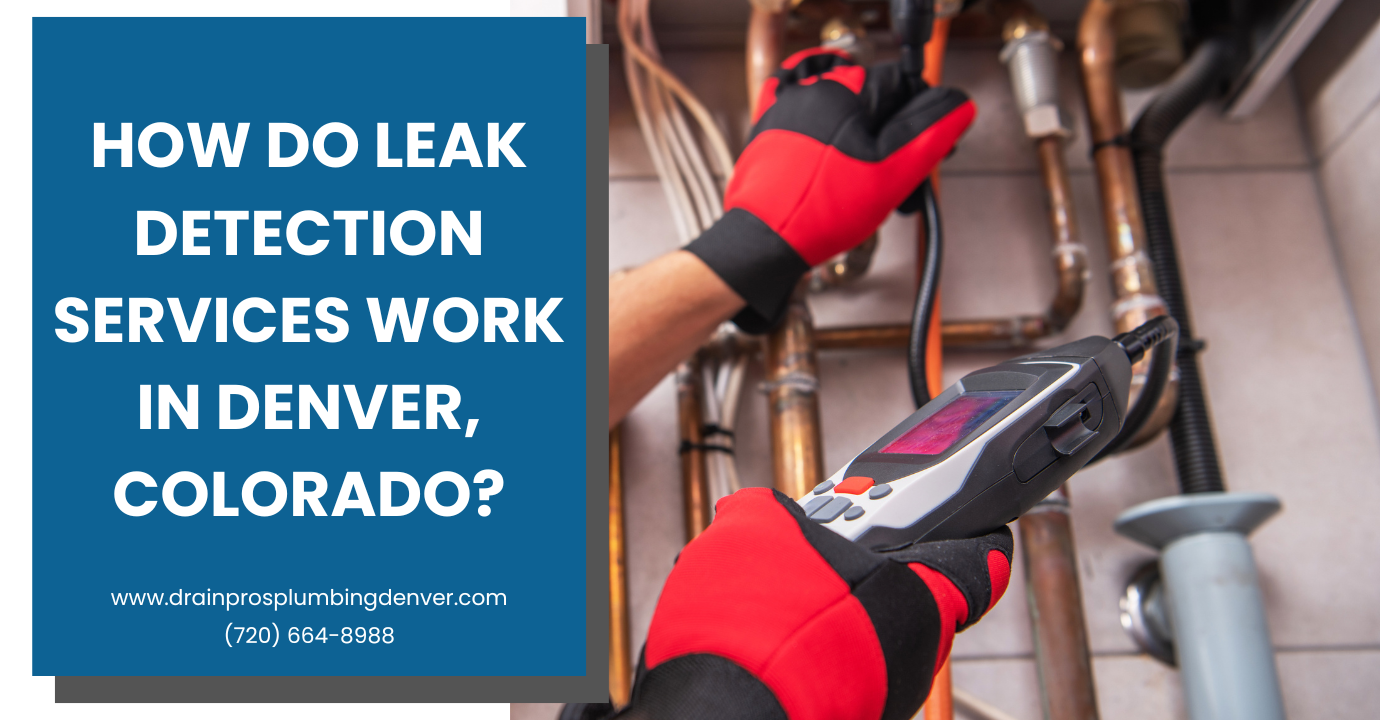
Leak detection services in Denver, Colorado work by using specialized tools to pinpoint where water is escaping—often without tearing into walls or digging up yards. A technician may start by checking your water meter for unexplained flow, then use acoustic listening devices to trace the sound of a leak under a slab, behind drywall, or along buried supply lines. For example, if you notice a sudden spike in your water bill or hear water running when everything is off, they can isolate zones in your plumbing to narrow the source fast.
When it comes to leak detection services Denver pricing, the cost typically depends on how hard the leak is to access and what methods are needed. A simple indoor pinhole leak may be found quickly with moisture meters and thermal imaging, while a hidden main-line leak in the yard might require acoustic sensors and pressure testing over a larger area. In practical terms, the more time and equipment it takes to confirm the exact location, the more the final price can vary.
What Impacts Leak Detection Costs in Denver?
If you’re comparing leak detection services Denver pricing, the biggest thing to understand is that you’re not paying for “guessing”—you’re paying for time, tools, and skill used to confirm the exact location of the leak. Pricing can change significantly depending on how hidden the leak is and whether the technician can isolate the problem quickly.
Key cost factors technicians look at first
- Leak location: behind drywall, under slab, in ceiling, or outdoors in the yard.
- Type of plumbing system: copper, PEX, galvanized, or mixed materials can affect how leaks present.
- Access and safety: finished basements, tight crawlspaces, and condo shutoff coordination can add time.
- Method needed: moisture meters and thermal imaging for interior leaks vs. acoustic and pressure testing for underground lines.
- Urgency: after-hours dispatch or active flooding can affect leak detection services Denver pricing.
Typical Leak Detection Services Denver Pricing (What to Expect)
Denver homeowners usually want a clear “range.” While every job is different, most professional leak detection calls fall into a few predictable tiers based on complexity and whether the leak is inside, under the foundation, or outside. Use the table below as a practical guide when budgeting for leak detection services Denver pricing.
| Leak scenario | Common detection methods | How pricing usually behaves |
|---|---|---|
| Visible leak under sink / toilet supply | Visual inspection, moisture meter | Often near a minimum service/diagnostic charge |
| Leak behind drywall (bathroom/kitchen) | Thermal imaging, moisture mapping, acoustic confirmation | Moderate—depends on how fast the “wet area” narrows |
| Slab leak (warm spots, cracking, unexplained usage) | Acoustic listening, pressure testing, thermal | Higher—specialized equipment + careful confirmation |
| Main line leak in yard (meter runs when off) | Acoustic sensors, pressure testing, zone isolation | Variable—distance and ground conditions matter |
Bottom line: leak detection services Denver pricing is usually most predictable when the leak is indoors and easiest to access, and most variable when the leak is underground or under a slab.
How Pros Detect Leaks Without Unnecessary Damage
A good technician treats your home like a medical diagnosis: confirm symptoms, isolate the system, then pinpoint the source. That process is why leak detection services Denver pricing can feel different from standard repair pricing—detection is often a stand-alone diagnostic service.
Common non-invasive detection tools
- Water meter diagnostics: confirms continuous flow when all fixtures are off.
- Acoustic listening equipment: “hears” leaks through concrete, soil, or behind finishes.
- Thermal imaging: identifies temperature differences caused by hot-water leaks or saturation patterns.
- Moisture meters: maps dampness across drywall, flooring, baseboards, and ceilings.
- Pressure testing: checks whether isolated lines hold steady pressure.
These tools help minimize exploratory cuts. Fewer holes and less digging can reduce total project cost—even if the upfront leak detection services Denver pricing feels like an extra step.
Signs You’re Likely Paying for Leak Detection (Not Just a Repair Call)
Some plumbing problems are obvious. But if you’re seeing “mystery water,” detection is usually the smart first move. In those cases, leak detection services Denver pricing is basically an investment in avoiding guesswork and repeat repairs.
Strong leak indicators
- Water bill jumps with no change in usage
- Meter keeps moving with all fixtures off
- Sound of running water inside walls or under floors
- Warm spots on slab floors (often hot-water line leaks)
- Musty odors or visible mildew returning quickly
- Low water pressure that comes and goes
- Wet patches in yard during dry weather
If any of these are happening, you’re squarely in “diagnostic” territory—where leak detection services Denver pricing will depend on how quickly the technician can isolate the issue.
Denver-Specific Pricing Variables Homeowners Don’t Always Consider
Two homes in the same neighborhood can have very different outcomes for leak detection services Denver pricing. Here’s why Denver can be a little unique.
Local variables that affect time on site
- Older housing stock: Denver has many homes with older supply lines and remodel layers that reduce access.
- Freeze/thaw cycles: seasonal movement can stress joints and create intermittent leaks that take longer to confirm.
- Finished basements: common in the area, and they can hide leaks behind ceilings and walls.
- Soil and yard layout: locating an underground leak may take longer when lines run under hardscape or mature landscaping.
These factors don’t automatically mean higher costs, but they do explain why leak detection services Denver pricing can vary even when symptoms sound similar.
Real-World Examples of How Pricing Can Vary
To make leak detection services Denver pricing easier to picture, here are realistic scenarios that show what changes the “difficulty level.”
Scenario A: Bathroom leak behind tile
- Symptoms: damp baseboard, paint bubbling on adjacent wall
- Detection path: moisture mapping + thermal check + targeted acoustic confirmation
- Why price stays controlled: the wet area is local and accessible once narrowed
Scenario B: Slab leak in a finished basement
- Symptoms: warm floor area, faint running-water sound at night
- Detection path: pressure isolation + acoustic location through slab + verification pass
- Why price increases: time required to isolate and confirm under concrete
Scenario C: Service line leak between meter and house
- Symptoms: meter movement when off, soggy strip near walkway
- Detection path: acoustic sweep + pressure test + line tracing across yard
- Why price varies: line depth, soil conditions, and distance from meter to structure
In each case, the goal is the same: a confirmed location you can repair confidently. That’s the value behind leak detection services Denver pricing.
How to Keep Leak Detection Costs From Climbing
You can’t control where the leak is—but you can reduce wasted time. The faster a tech can isolate the issue, the more predictable leak detection services Denver pricing tends to be.
Before the appointment, do these quick steps
- Take photos of visible staining, warped flooring, or wet drywall progression.
- List recent changes (new appliance, remodel, irrigation startup, pressure changes).
- Clear access to the water heater, shutoff valve, meter, crawlspace entry, and affected rooms.
- Avoid running water for 30–60 minutes beforehand if possible—quiet conditions help acoustic tools.
If you want a stronger prep checklist, this guide helps homeowners avoid delays: what to do before the plumber arrives.
When Leak Detection Leads to Other Services (And Why That Matters)
Detection is step one. After pinpointing the leak, the next step may be repair, cleanup, or line replacement. Planning for that sequence helps you evaluate leak detection services Denver pricing as part of the overall cost—not a surprise add-on.
Common “next step” services after a leak is found
- Slab leak repair or reroute (when a line is failing under concrete repeatedly)
- Water line repair (especially between meter and home)
- Drying and mitigation to prevent mold and material damage
- Drain or sewer diagnostics if symptoms point to drainage issues rather than supply leaks
For example, if the investigation suggests the issue is on a buried supply, you may need Water / Sewer / Gas Lines service after the leak is located.
Leak Detection vs. DIY: What You Can Safely Check
Professional leak detection services Denver pricing makes the most sense when the leak is hidden. Still, there are a few safe checks you can do first—especially if you’re trying to decide whether you need a diagnostic visit.
DIY checks that don’t risk damage
- Meter test: turn off all water, confirm meter movement over 10–20 minutes.
- Toilet dye test: add dye to the tank and see if it leaks into the bowl without flushing.
- Cabinet and vanity check: feel supply stops, P-traps, and shutoff valves for moisture.
- Appliance inspection: check washing machine hoses and icemaker supply lines for drips.
If these checks don’t reveal the source, that’s when leak detection services Denver pricing becomes worth it—because the next DIY step is usually “start opening things up,” which gets expensive fast.
Why Accurate Leak Detection Can Save Money Long-Term
It’s reasonable to compare quotes. But the cheapest diagnostic isn’t always the best value if it leads to unnecessary demolition or a missed leak. Accurate detection often lowers the total cost by keeping repairs targeted.
Where savings typically show up
- Fewer exploratory cuts in drywall, tile, and flooring
- Less time spent digging and less landscape disruption
- Lower water loss by reducing time-to-repair
- Less secondary damage (warping, mold risk, ceiling collapse)
According to the U.S. Environmental Protection Agency, household leaks can waste significant water over time, and many homes have leaks that are both common and fixable with proper diagnosis. That’s one reason leak detection services Denver pricing can pay off quickly when a leak is continuously running.
What “Good” Pricing Transparency Looks Like
Because leak detection services Denver pricing is tied to complexity, a trustworthy provider usually explains what’s included and what could change.
Look for these pricing clarity signals
- Clear scope: what systems are being tested (whole home vs. isolated line)
- Methods explained: which tools they expect to use and why
- Deliverable: what you receive (marked location, photos, written findings)
- Next-step options: repair choices after detection, not pressure to “rip and replace”
And if you’re trying to balance budget with quality, it helps to understand broader pricing norms across plumbing work in the area—this overview of affordable plumbing services in Denver can give you a baseline for what fair, upfront service often looks like.
Leak Detection Is Plumbing Science, Not Guesswork
Modern plumbing systems are built to be reliable, but once water escapes a pressurized line, it follows framing, concrete seams, and soil paths that can be misleading. That’s why trained technicians rely on testable proof—not assumptions—to justify repairs.
What experience brings to the job
- Faster isolation: knowing which valves to close and in what order
- Better interpretation: recognizing false positives (condensation vs. active leak)
- Repair-minded locating: finding a spot that makes the fix cleaner and less invasive
In practice, that expertise directly affects leak detection services Denver pricing because efficient diagnostics mean less time chasing the wrong area.
Confidence You Can Build On
When you’re dealing with hidden water damage, the real goal isn’t just “finding moisture”—it’s pinpointing the leak so repairs are precise. That’s what makes leak detection services Denver pricing worth comparing carefully: you want clear scope, strong tools, and proven methods that reduce disruption.
Choose technicians who use professional-grade acoustic and pressure-testing equipment, document findings clearly, and follow standard trade practices and local code expectations. With the right approach, leak detection services Denver pricing becomes predictable, defensible, and tied to real results—less demolition, faster repairs, and fewer repeat issues.
leak detection services Denver pricing should ultimately reflect accuracy, safety, and accountability—because the most expensive outcome is paying twice for the same leak.
Frequently Asked Questions
Stop Chasing Mystery Water—Get a Precise Leak Location Fast
If your water bill jumped, your meter won’t stop moving, or you’re hearing water where it shouldn’t be, don’t waste time (or money) guessing. Drain Pros Plumbing Denver uses proven, non-invasive leak detection tools to pinpoint the source with minimal disruption—so you can move straight to the right repair, avoid repeat damage, and keep your total costs under control.



