
Executive Summary
How plumbing systems handle extreme cold primarily depends on keeping pipe temperatures above freezing, blocking cold-air exposure, and minimizing stagnant water that can form ice plugs and burst pipes. Effective protection combines smart pipe routing and building design with targeted homeowner actions before, during, and after cold snaps.
Key Takeaways
- Prevent freezing by controlling temperature, airflow, and stagnation: Winter-proof plumbing focuses on keeping pipes warm, stopping drafts from reaching vulnerable runs, and avoiding long periods of motionless water.
- Pipe placement is the first line of defense: Routing supply lines through interior walls and conditioned spaces reduces freeze risk more reliably than after-the-fact fixes.
- Air sealing can matter as much as insulation: Drafts at rim joists, penetrations, and crawl spaces can overwhelm insulation and rapidly pull heat from pipes.
- Cold-snap tactics should be targeted, not generic: Controlled dripping, open cabinet doors, steady thermostat settings, and heat cable are most effective when applied to known problem lines and installed/used correctly.
- Fast response limits damage when freezing is suspected: Opening the affected faucet, thawing gradually (no open flames), and knowing the main shutoff reduces the chance that a freeze becomes a burst and major water loss.
Plumbing systems prevent pipes from freezing in extreme cold by keeping water moving, keeping pipes warm, and stopping cold air from reaching vulnerable sections—this is how plumbing systems handle extreme cold in real homes and buildings. For example, pipes are often routed through interior walls instead of exterior walls, and exposed runs in basements or crawl spaces are wrapped with insulation. In a cold snap, a small drip from a faucet can keep water from sitting still long enough to freeze. Heated areas like utility rooms and cabinet spaces are sometimes left slightly open so warm indoor air can circulate around supply lines. Outdoor hose bibs may be shut off from inside the house and drained so trapped water can’t turn to ice and split the pipe.
How plumbing systems handle extreme cold: the core principles
At a practical level, how plumbing systems handle extreme cold comes down to three physics basics: water freezes at 32°F (0°C), ice expands (which creates bursting pressure), and moving or warmed water is harder to freeze. Most cold-weather plumbing strategies are built around those facts.
Here’s the simple framework plumbers use when designing and protecting homes:
- Keep water above freezing (heat, insulation, smart routing).
- Limit exposure to cold air (air sealing, closing crawl-space drafts, protecting exterior penetrations).
- Reduce “dead-end” water (avoid long stagnant runs; keep a small flow during extreme events).
This is why how plumbing systems handle extreme cold looks like a combination of building design + pipe protection + homeowner habits during cold snaps.
Why pipes freeze (and why they burst)
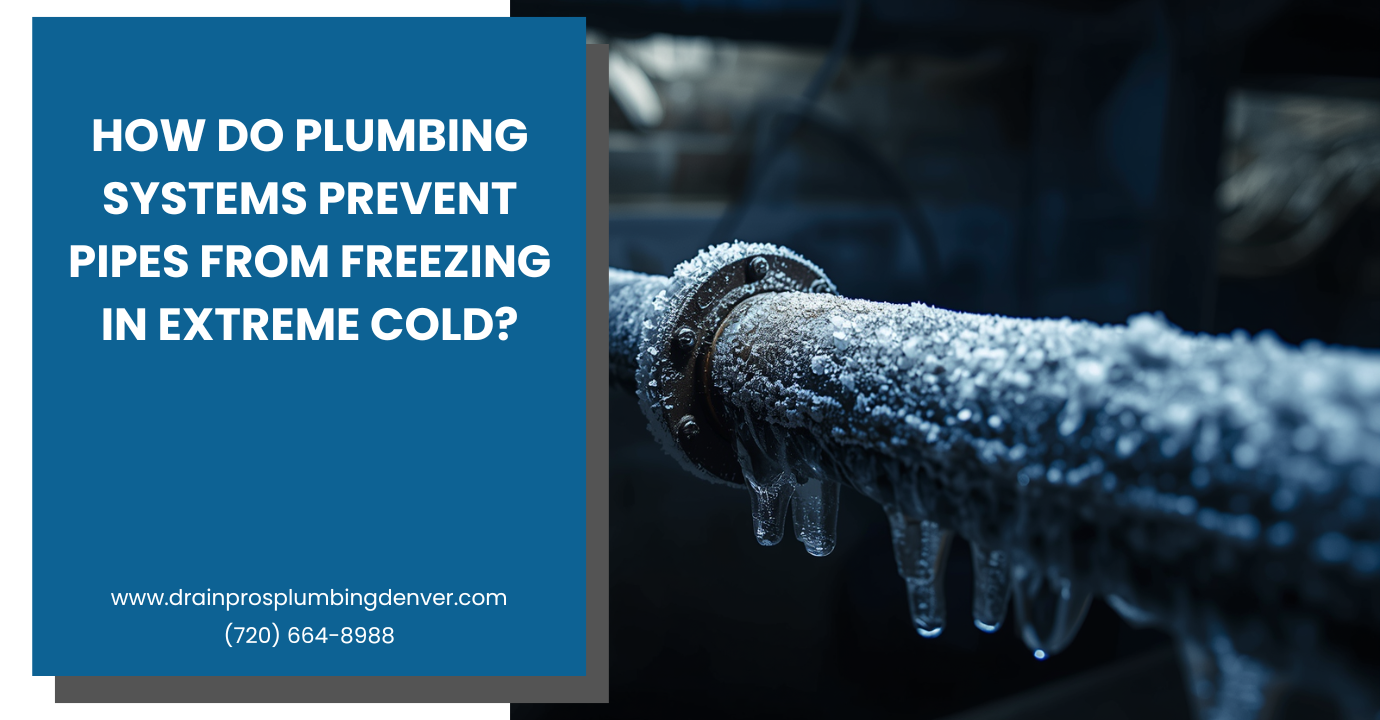
Pipes don’t usually freeze because the outdoor temperature is low—it’s because the pipe temperature drops below freezing long enough for water inside to crystallize. The real danger is what happens next.
- Freezing starts at the coldest point (often near an exterior wall, rim joist, or crawl space vent).
- Ice forms a plug that blocks the pipe.
- Pressure builds between the plug and a closed valve/faucet, which can split copper, CPVC, PEX fittings, or valves.
According to FEMA, frozen pipes are among the common causes of residential water damage during winter storms, and the damage often occurs when the pipe thaws and water begins flowing again. That’s a major reason how plumbing systems handle extreme cold focuses on prevention—burst repairs and water cleanup can escalate quickly.
How pipe routing and building design reduce freezing risk
One of the most important (and least visible) parts of how plumbing systems handle extreme cold is where pipes are placed in the first place. Good routing can reduce freeze risk before insulation or heat tape is even considered.
Best-practice routing choices
- Interior wall routing instead of exterior walls wherever possible.
- Keeping supply lines out of unconditioned spaces (vented crawl spaces, attics, unheated garages).
- Shorter runs to exterior fixtures to minimize exposed pipe volume.
- Protected vertical chases for multi-story plumbing stacks to reduce cold infiltration.
Air sealing matters as much as insulation
Insulation slows heat loss, but air leaks can overwhelm insulation performance. Cold air washing across a pipe can freeze it even when it “looks insulated.” Sealing gaps around:
- hose bib penetrations
- dryer vents and utility penetrations
- rim joists and sill plates
- crawl space access doors
…is a quiet but critical piece of how plumbing systems handle extreme cold in real homes.
What homeowners should do before a cold snap
If extreme cold is forecast, a few steps can dramatically reduce the chance of a freeze. Think of this as the “storm prep” checklist for how plumbing systems handle extreme cold.
Fast freeze-prevention checklist
- Disconnect outdoor hoses and drain them.
- Shut off and drain outdoor lines if your home has an interior shutoff for hose bibs.
- Open cabinet doors under sinks on exterior walls to let warm air circulate.
- Set the thermostat consistently (avoid big nighttime setbacks during a deep freeze).
- Close crawl-space vents if your crawl space is designed to be closed in winter (homes vary—use your home’s intended design).
- Locate your main water shutoff so you can act fast if a pipe bursts.
These are simple actions, but they’re central to how plumbing systems handle extreme cold when weather turns severe.
How to keep pipes from freezing during extreme cold (step-by-step)
When temperatures drop for multiple hours (especially overnight), focus on keeping vulnerable pipes warm and water moving.
1) Maintain a safe indoor temperature
- Keep heat on in all areas with plumbing—especially basements, utility rooms, and additions.
- If you have rooms over garages, pay extra attention; those pipe runs are often colder.
2) Use a controlled drip only when needed
A small drip can help because flowing water is slower to freeze than stagnant water. But it’s not always necessary and can waste water—use it strategically for known problem lines (like a sink on an exterior wall). This tactic is one small part of how plumbing systems handle extreme cold, not the whole plan.
3) Add insulation—and protect against airflow
- Insulate exposed pipes in unconditioned spaces (basements, crawl spaces, garages).
- Seal drafts first, then insulate (drafts can negate insulation).
4) Consider heat cable/tape where appropriate
Heat cable can be effective on vulnerable runs, but it must be installed and used according to the manufacturer’s listing and instructions. Improper use (wrong product, overlapped cable, damaged cord) can create safety risks. When done correctly, it’s a proven tool in how plumbing systems handle extreme cold for high-risk sections.
What to do if you suspect a frozen pipe
Quick action can prevent a split. If you turn on a faucet and only a trickle comes out—or no water at all—treat it seriously.
Signs a pipe may be frozen
- No water or very low flow at a specific fixture
- Visible frost on a pipe
- Bulging pipe section or unusual odors from drains (from disturbed traps/venting in extreme conditions)
Safe thawing steps
- Open the faucet on the affected line (this relieves pressure as ice melts).
- Warm the area gradually using a space heater (monitored), heating pad, or warm towels.
- Work from the faucet side toward the colder section so melting water has a path out.
- Avoid open flames (no propane torches). They can damage pipe materials and create fire risk.
If you can’t locate the frozen section—or you see swelling, cracking, or active leaking—shut off the water and call a licensed plumber. Knowing how plumbing systems handle extreme cold also means knowing when it’s no longer a DIY situation.
How extreme cold impacts drains, sewers, and water heaters
Most people focus on supply pipes, but how plumbing systems handle extreme cold also includes drains, sewer lines, and hot-water equipment.
Drains and sewers
- Slow drains can worsen in winter because grease and fats harden faster in cold pipes.
- Snowmelt + solids can add load to systems and expose partial blockages.
- Older or sagging sewer lines (bellies) may retain water that can freeze near shallow sections.
If winter clogs keep returning, targeted sewer video inspection can identify cracked pipe, root intrusion, or low spots that make cold-weather backups more likely—an overlooked part of how plumbing systems handle extreme cold in older neighborhoods.
Water heaters
- Cold inlet water temperatures drop in winter, so recovery time can increase.
- Garages and unheated utility spaces can put water heaters and nearby piping at freeze risk.
If you’re troubleshooting winter hot-water issues, see practical maintenance guidance here: what happens if you don’t flush your water heater regularly. Keeping the system efficient supports how plumbing systems handle extreme cold because it reduces strain and improves reliability.
What it typically costs to fix frozen or burst pipes
Costs vary widely by access, materials, and how much water damage occurred. The pipe repair itself can be straightforward; the expensive part is often mitigation and restoration after a burst.
- Minor freeze event (no burst): service call + thawing + prevention recommendations.
- Burst pipe repair: pipe section replacement, fittings/valves, and possible drywall repair.
- Major damage: water extraction, drying equipment, mold prevention, and finish repairs.
IIHS notes that water damage and freezing is a leading cause of homeowners insurance losses in the U.S., with claims often running into the thousands once interior materials are affected. That reality is why how plumbing systems handle extreme cold is ultimately about risk management: spending a little on prevention can avoid a much larger loss.
How to winterize plumbing in vacant homes, rentals, and vacation properties
When a building is unoccupied, how plumbing systems handle extreme cold changes—because there’s no daily water use, no cabinet doors opening, and sometimes lower thermostat settings.
Winterizing options (choose based on your risk)
- Keep heat on and set thermostats to a safe minimum (common practice is 55°F, but confirm what your building and insurer recommend).
- Shut off water and drain the system if the property may lose heat or power.
- Use compressed air + antifreeze in traps for seasonal closures (RV/marine antifreeze—never automotive antifreeze).
- Add leak detection/shutoff devices where appropriate to limit damage if a break occurs.
In managed properties, documenting these steps and doing periodic checks is part of how plumbing systems handle extreme cold responsibly.
How plumbing materials and fixture types affect freezing risk
Not all plumbing responds the same way under freezing conditions. Material choice can influence how forgiving the system is during a cold snap.
| Component | Cold-weather risk | Practical mitigation |
|---|---|---|
| Copper supply lines | Can split when pressure builds behind ice | Insulate + air seal; maintain heat; avoid exterior-wall runs |
| PEX supply lines | More tolerant of expansion, but fittings/valves can fail | Protect fittings; keep vulnerable sections warm; consider heat cable if needed |
| Outdoor hose bibs | High risk due to exterior exposure | Use frost-free sillcocks; shut off/drain interior stop; remove hoses |
| Garage/attic piping | Rapid heat loss; strong drafts | Relocate if possible; insulate + air seal; monitor temperatures |
Understanding these differences helps explain how plumbing systems handle extreme cold in both new construction and retrofits.
What “good plumbing” means in winter (codes, practice, and fundamentals)
Plumbing isn’t just pipes—it’s a designed system that interacts with structure, heating, and water pressure. A clear overview of the discipline is helpful context: plumbing includes supply, drainage, venting, and fixtures—all of which can be impacted by cold in different ways.
In cold climates, good winter performance typically reflects:
- code-compliant installation and supports
- correct pipe sizing and routing
- proper shutoffs and accessible valves
- tested repairs (pressure/functional testing) after any freeze event
That full-system thinking is the real story behind how plumbing systems handle extreme cold.
Cold-weather takeaway: the smartest prevention plan
If you want the simplest, most reliable approach to how plumbing systems handle extreme cold, focus on the highest-impact moves:
- Fix airflow first (seal drafts at rim joists, penetrations, and crawl space access).
- Insulate vulnerable runs in unconditioned spaces.
- Protect exterior fixtures by shutting off/draining and removing hoses.
- Use controlled dripping only for known problem lines during deep freezes.
- Know the shutoff and act fast if you suspect a freeze or leak.
Do those well, and how plumbing systems handle extreme cold becomes far less stressful—because you’ve removed the common failure points before temperatures hit their worst.
Built for the Freeze: What Pros Look for After the Weather Breaks
After a major cold snap, a professional inspection often focuses on hidden damage that doesn’t show up immediately. Experienced plumbers typically check:
- hairline cracks at fittings and stop valves
- hose bibs and interior shutoffs that may have split behind the wall
- pressure irregularities that can signal a developing leak
- water heater connections and exposed garage/basement piping
That post-freeze review is part of how plumbing systems handle extreme cold in well-maintained buildings: prevention before the storm, verification after it.
For peace of mind, work with properly licensed and insured plumbing professionals who follow code, manufacturer installation requirements, and standard safety practices—especially when diagnosing freeze-related leaks, evaluating pipe condition, or recommending reroutes and insulation upgrades.
Frequently Asked Questions
Freeze-Proof Your Plumbing Before Denver’s Next Cold Snap
When temperatures plunge, the smallest weak spot—an uninsulated run, a drafty crawl space, a neglected hose bib—can turn into a burst pipe and a messy, expensive cleanup. If you want a clear plan to protect your home (or need fast help if something already froze), Drain Pros Plumbing Denver can assess your high-risk lines, recommend practical upgrades like insulation and heat cable where it makes sense, and handle freeze-related repairs the right way—before minor winter stress becomes major water damage.



